Introduction
Crochet is more than just loops and yarn—it’s a language of texture, rhythm, and expression. Yet for many passionate makers, the leap from basic stitches to complex crochet stitches feels intimidating, even overwhelming. You’ve likely mastered single, double, and treble crochets, but when patterns call for bobbles, clusters, popcorns, or intricate lace motifs, doubt creeps in. What if you drop a stitch? What if the pattern doesn’t “read” like your usual projects?
Here’s the truth: mastering complex crochet stitches isn’t about innate talent—it’s about method, mindset, and the right support system. In this comprehensive guide, you’ll discover not only how to execute advanced techniques with precision but also why they matter in today’s handmade economy. Whether you’re crafting for joy, building a small business, or preparing to publish your own designs, confidence in complex stitches opens doors to premium markets, loyal audiences, and creative fulfillment.
This article draws on years of hands-on experience—from teaching workshops to consulting for handmade brands—and distills proven strategies that transform confusion into competence. By the end, you won’t just understand complex crochet stitches; you’ll approach them with anticipation, not anxiety.
What This Topic Means for Crochet & Knitting Businesses
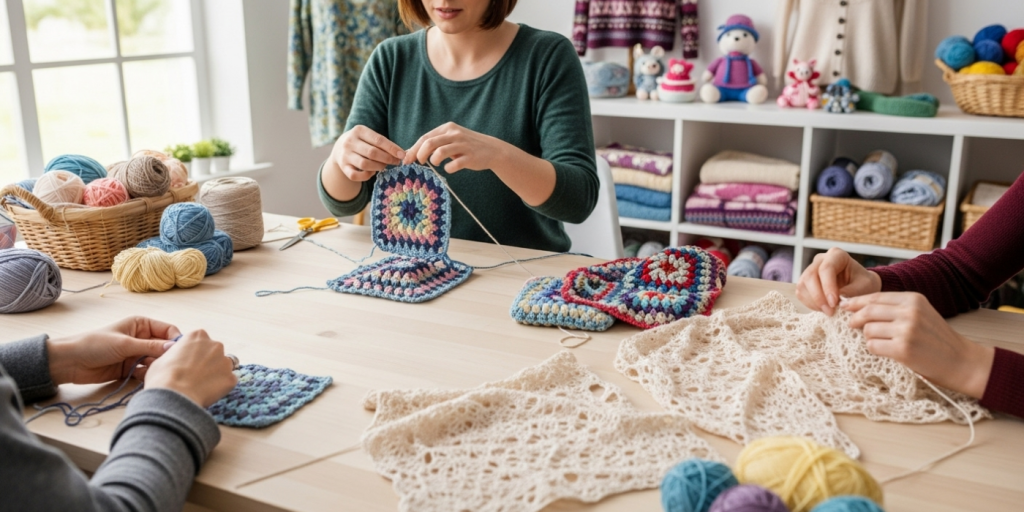
In the handmade marketplace, complex crochet stitches are more than decorative—they’re differentiators. While simple scarves and beanies saturate online shops, pieces featuring textured cables, Tunisian lace, or multi-layered mosaic stitches command higher prices and attract discerning buyers.
From working with multiple crochet brands, I’ve observed a clear trend: customers increasingly seek artisanal depth. They don’t just want a blanket—they want a story woven in stitches. A shawl with interlocking shell motifs signals craftsmanship. A market bag using bullion stitches conveys time investment and skill. These details justify premium pricing and foster brand loyalty.
Moreover, designers who master complex techniques gain credibility. Pattern testers, magazine editors, and yarn companies prioritize collaborators who can reliably execute—and teach—advanced methods. In many crochet businesses, the ability to confidently navigate intricate charts or written instructions becomes a core asset, directly impacting income through pattern sales, commissions, or sponsored content.
Why This Strategy Works Especially Well in the Crochet Community
Unlike other crafts, crochet thrives on accessibility and sophistication. Beginners start with a hook and a ball of yarn; experts create wearable art indistinguishable from haute couture. This duality makes the community uniquely receptive to skill progression.
Experienced designers often recommend embracing complexity gradually because the crochet world rewards growth. Social media platforms like Instagram and Pinterest amplify visually rich textures—think raised diamonds, 3D flowers, or geometric colorwork. When you post a project using a challenging stitch, engagement spikes. Followers ask, “How did you do that?”—opening opportunities for tutorials, e-books, or live classes.
Additionally, the collaborative spirit of the crochet community means help is abundant. Ravelry groups, Discord servers, and YouTube comment sections buzz with troubleshooting advice. Unlike solitary crafts, crochet offers built-in mentorship. Mastering complex stitches isn’t a solo climb—it’s a shared journey where every breakthrough inspires others.
Materials, Tools, or Resources Needed
Before tackling advanced techniques, ensure your toolkit supports precision and comfort:
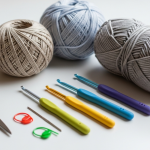
- Hooks: Invest in ergonomic hooks (e.g., Furls, Clover Amour) with smooth joins to prevent snagging. Sizes US G/6 (4.0 mm) to US K/10.5 (6.5 mm) cover most intermediate-to-advanced projects.
- Stitch Markers: Use split-ring markers for lace or colorwork; locking markers for tracking rows in repetitive patterns.
- Tapestry Needle: Blunt-tipped for weaving in ends without splitting fibers.
- Row Counter: Digital or manual—essential for multi-row repeats.
- Good Lighting: A daylight lamp reduces eye strain during detailed work.
- Pattern Sources: Trusted designers (e.g., Toni Lipsey, Dedri Uys) or magazines (Interweave Crochet, Mollie Makes) offer well-tested complex patterns.
- Notebook or Digital App: Track modifications, tension notes, or stitch counts.
Don’t underestimate the power of a quiet, clutter-free workspace. Complex stitches demand focus—minimize distractions to build muscle memory efficiently.
Yarn Types and Fiber Considerations
Yarn choice dramatically impacts how complex stitches appear and behave. Here’s what to consider:
- Stitch Definition: Smooth, non-fuzzy yarns like cotton (e.g., Lion Brand 24/7 Cotton), mercerized cotton, or bamboo highlight texture. Avoid bouclé or eyelash yarns—they obscure intricate details.
- Drape vs. Structure: For lace or openwork, choose drapey fibers (silk blends, fine merino). For 3D stitches like bobbles or puff stitches, firmer wools or acrylics hold shape better.
- Color: Solid or semi-solid colors showcase stitch geometry. Variegated yarns can muddy complex patterns—save them for simpler stitches.
- Weight Consistency: Uneven hand-dyed skeins may cause tension shifts. If using artisan yarns, swatch first to test behavior.
- Care Requirements: If selling finished goods, match fiber care to customer expectations (e.g., machine-washable acrylic for baby items).
Pro tip: Always swatch in the exact stitch pattern you’ll use. A gauge swatch in stockinette-style crochet won’t reflect how a cluster stitch fabric behaves.
Skill Level Breakdown (Beginner / Intermediate / Advanced)
Understanding where you stand helps target practice effectively:
Beginner
- Comfortable with chain, slip stitch, SC, DC, HDC.
- Can follow simple written patterns.
- May struggle with counting stitches or reading charts.
- Not ready for complex stitches yet—focus on consistency first.
Intermediate
- Confident with increases/decreases, color changes, basic shaping.
- Has completed garments or home décor items.
- Understands terms like “front loop only” or “working in the round.”
- Ready to explore: Shell stitches, basic clusters, simple lace (e.g., V-stitch).
Advanced
- Reads charts fluently; adapts patterns intuitively.
- Manages multiple techniques in one project (e.g., filet + overlay).
- Troubleshoots errors without frogging entire sections.
- Can tackle: Bullion stitches, broomstick lace, entrelac, overlay crochet, multi-strand colorwork.
If you’re intermediate, start with one new complex stitch per project. Mastery builds cumulatively—don’t rush.
Step-by-Step Guide to Mastering Complex Crochet Stitches
Follow this systematic approach to internalize any advanced technique:
Step 1: Decode the Stitch Language
Read the instructions three times:
- First pass: Get the gist.
- Second: Highlight action verbs (“yarn over,” “pull through 4 loops”).
- Third: Visualize each motion. Sketch arrows on paper if needed.
Step 2: Swatch in Isolation
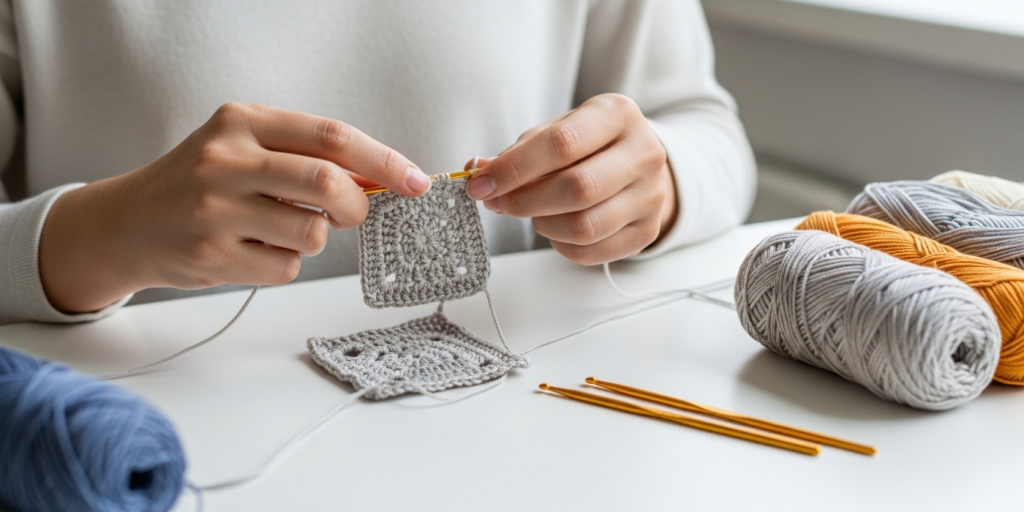
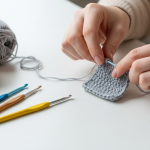
Never jump into a full project. Create a 4″x4″ swatch using only the new stitch. Work at least 10 rows to observe rhythm and fabric behavior.
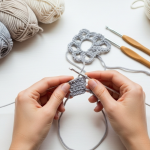
Step 3: Slow-Motion Practice
Use a larger hook and smooth yarn. Execute each motion deliberately:
- Pause between steps.
- Say actions aloud (“YO, insert hook, pull up loop…”).
- Film yourself to spot tension issues.
Step 4: Count Relentlessly
Complex stitches often involve uneven loop counts. After each row:
- Verify stitch count matches pattern.
- Check for accidental yarn-overs or missed pulls.
- Mark the first/last stitch of each row with removable markers.
Step 5: Build Muscle Memory
Repeat the swatch until you can work 5 rows without looking at instructions. Speed comes later—accuracy first.
Step 6: Integrate Gradually
Once confident, incorporate the stitch into a small project (e.g., coaster, headband). Then scale up to garments or blankets.
Real Example: Learning the popcorn stitch
- Day 1: Swatch 10 popcorns in worsted weight cotton.
- Day 2: Practice closing popcorns tightly without distorting adjacent stitches.
- Day 3: Combine with SC rows in a dishcloth pattern.
Within a week, it becomes second nature.
Common Mistakes and How to Avoid Them
Even seasoned crocheters stumble with complex stitches. Here’s how to sidestep frequent pitfalls:
Mistake 1: Ignoring Tension Shifts
Advanced stitches often require looser or tighter tension than basics.
✅ Fix: Adjust hook size up or down by 0.5–1.0 mm specifically for that stitch section.
Mistake 2: Misreading Repeats
Patterns like “(dc, ch 2, dc) in next st, skip 1” trip up readers.
✅ Fix: Use brackets or colored pens to mark repeat units in printed patterns.
Mistake 3: Skipping Gauge Swatches
Assuming “it’ll block out” leads to ill-fitting garments.
✅ Fix: Swatch in the actual stitch pattern, wash/block it, then measure.
Mistake 4: Rushing Through Charts
Symbols can be ambiguous (e.g., is that a cluster or a bobble?).
✅ Fix: Cross-reference chart keys with written instructions. When in doubt, contact the designer.
Mistake 5: Poor End Management
Complex stitches create more ends (e.g., color changes in intarsia).
✅ Fix: Weave ends as you go using duplicate stitching along seam lines.
Mistake 6: Fear of Frogging
Hesitating to undo mistakes wastes more time.
✅ Fix: Embrace “rip it, rip it.” Use stitch markers every 5 rows to limit unraveling.
Advanced Tips and Professional Insights
Go beyond basics with these industry-tested strategies:
Tip 1: Use the “Hook-as-Needle” Technique
For bullion or roll stitches, temporarily treat your hook like a tapestry needle—slide it through multiple loops to control bulk.
Tip 2: Modify for Your Style
If a stitch feels awkward, adapt it. Too tight? Try working into back bumps only. Too loose? Add a half-double instead of single.
Tip 3: Leverage Video in Layers
Watch a tutorial at 0.5x speed, then mute it and mimic the hand movements. Repeat until fluid.
Tip 4: Keep a “Stitch Bible”
Document each complex stitch you learn:
- Name
- Yarn/hook used
- Personal notes (“needs extra tug on final pull-through”)
- Photo of swatch
This becomes invaluable for future reference or teaching.
Tip 5: Join a Stitch-A-Long (SAL)
Many designers host SALs for intricate patterns. The group accountability and real-time Q&A accelerate learning.
From working with multiple crochet brands, I’ve seen designers who maintain detailed stitch journals land more publishing deals—their reliability shines through.
Real-World or Hypothetical Examples
Consider Maya, a part-time crocheter who wanted to sell on Etsy. She started with basic beanies but struggled to stand out. After mastering the pineapple stitch (a classic complex motif), she created a limited-edition summer shawl collection.
- She swatched extensively in linen-blend yarn to enhance drape.
- Photographed close-ups highlighting the lace geometry.
- Included a free mini-tutorial link in her shop (“How to Start Pineapple Stitch”).
Result? Her shawls sold out in 72 hours, and her email list grew by 400%. Customers praised the “heirloom quality”—a direct result of her stitch mastery.
Another example: Liam, a male designer breaking stereotypes in crochet. He combined overlay crochet with modern silhouettes, creating gender-neutral vests featured in Vogue Knitting. His secret? He practiced each overlay sequence on scrap yarn for weeks before committing to luxury merino.
These stories prove that complex stitches aren’t just technical—they’re strategic assets.
Customization and Adaptation Ideas
Once you’ve learned a complex stitch, make it your own:
- Scale It: Use tiny versions for edging, oversized for statement blankets.
- Color Play: Alternate high-contrast colors in cable stitches for graphic impact.
- Hybrid Techniques: Combine Tunisian simple stitch with surface crochet for mixed-media effects.
- Functional Tweaks: Add elastic to bobble-stitch cuffs for snug fit.
- Cultural Fusion: Incorporate traditional motifs (e.g., Irish rose, African love knots) into contemporary designs.
Experienced designers often recommend documenting adaptations. That modified cluster stitch might become your signature.
Care, Maintenance, or Best Practices
Complex stitches often mean delicate fabrics. Protect your work:
- Blocking: Essential for lace or openwork. Use rust-proof pins and gentle steam.
- Washing: Hand-wash textured items in cold water; avoid agitation that distorts 3D elements.
- Storage: Fold, don’t hang, heavy textured pieces—they can stretch under their own weight.
- Repair: Keep leftover yarn for invisible mending. Complex stitches are harder to rework, so prevention matters.
For sellers: Include a care card with every item. It shows professionalism and reduces returns.
Monetization Opportunities
Mastering complex crochet stitches unlocks multiple revenue streams—ethically and sustainably:
- Pattern Design: Sell PDFs on Etsy or Ravelry. Advanced patterns have less competition and higher price points ($6–$9 vs. $3–$5 for basics).
- Workshops: Host virtual or local classes. Charge $25–$50/person for 2-hour sessions on specific stitches.
- Custom Commissions: Offer bespoke pieces (e.g., wedding shawls with intricate edging) at $150+.
- Content Creation: Build a YouTube channel or blog. AdSense and affiliate links (to recommended tools/yarns) generate passive income.
- Collaborations: Partner with yarn dyers for exclusive kits featuring your complex-stitch patterns.
In many crochet businesses, the shift from “maker” to “mentor” begins with sharing hard-won stitch expertise. Just ensure your monetization educates—it shouldn’t exploit beginners’ insecurities.
Frequently Asked Questions (FAQ)
What’s the hardest crochet stitch to learn?
Many find the bullion stitch or broomstick lace challenging due to unconventional techniques. However, difficulty is subjective—some struggle with lace, others with 3D textures. Focus on one at a time.
How long does it take to master a complex stitch?
With daily 20-minute practice, most intermediate crocheters gain confidence in 1–2 weeks. Full fluency may take months, but usable proficiency comes quickly.
Can I use complex stitches in amigurumi?
Yes! Popcorn stitches add texture to animal noses or scales. Just ensure stuffing won’t distort the fabric. Use smaller hooks for tighter gauge.
Do I need special hooks for advanced stitches?
Not necessarily, but ergonomic hooks reduce fatigue during long sessions. For very fine lace, steel hooks (sizes 0.6–1.5 mm) offer precision.
How do I fix a dropped stitch in a complex pattern?
Use a crochet hook to ladder back up, mimicking the original stitch structure. If unsure, frog back to the last secure row—it’s faster than guessing.
Are complex stitches worth the effort for beginners?
Not immediately. Build a solid foundation first. But if you’re intermediate and feel stagnant, learning one complex stitch reignites creativity and skill growth.
Conclusion
Mastering complex crochet stitches isn’t about perfection—it’s about persistence wrapped in curiosity. Every expert was once a beginner who chose to try one more row, frog one more time, and ask one more question.
The journey transforms you: your hands gain dexterity, your eyes learn to read fabric like text, and your confidence spills into every project. Whether you’re crafting heirlooms, building a brand, or simply seeking mindful creation, these stitches deepen your connection to the craft.
So pick one technique that intrigues you. Swatch it slowly. Celebrate small wins. And remember—every intricate masterpiece began with a single, uncertain loop. You’ve got this. Now go make something beautiful.
Helena Nogueira é uma entusiasta do crochê e do artesanato, explorando novas técnicas e projetos em busca de criações únicas e cheias de personalidade. Apaixonada por criatividade e desenvolvimento pessoal, ela alia dedicação e curiosidade para transformar fios em arte, cultivando hábitos que impulsionam seu crescimento enquanto compartilha beleza e inspiração com quem valoriza o feito à mão.