Introduction
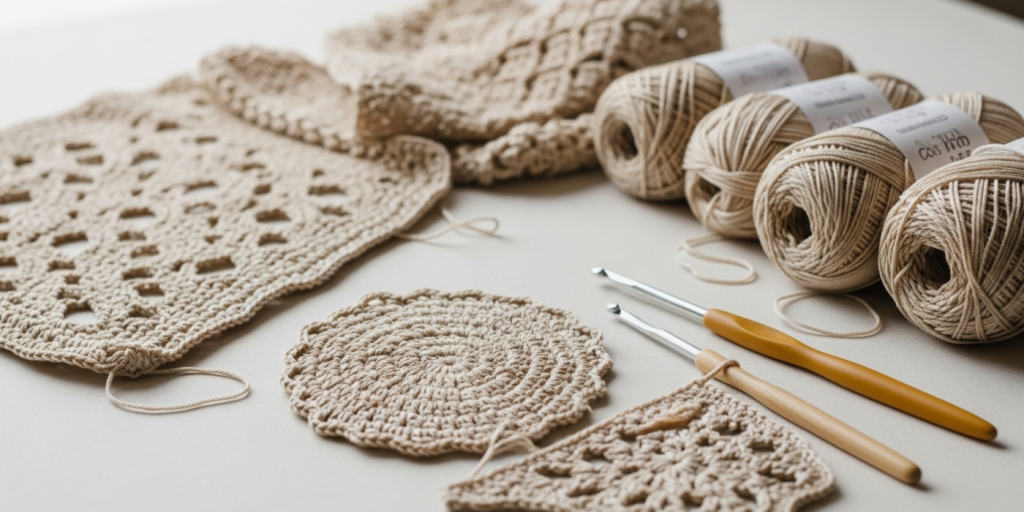
Intricate crochet stitch patterns are the hallmark of advanced craftsmanship—where texture, geometry, and rhythm converge into wearable or decorative art. Whether you’re crafting a lace shawl with interwoven cables or a modern garment built from complex mosaic motifs, mastering these detailed designs requires more than just skill; it demands strategy, patience, and a deep understanding of technique. For both hobbyists and professionals in the handmade space, knowing the best practices for working with intricate crochet stitch patterns is essential to producing consistent, high-quality results that stand out in a crowded market.
From my years of designing, teaching, and consulting for crochet brands worldwide, I’ve seen how even experienced makers stumble when tackling elaborate charts or multi-row repeats. The difference between frustration and flow often lies in preparation, tool selection, and mindset. This guide distills real-world insights into a comprehensive roadmap—covering everything from yarn choice to monetization—so you can approach complex projects with confidence and clarity. Whether you’re creating for personal joy or building a business around handmade goods, these practices will elevate your work and reduce costly errors.
What This Topic Means for Crochet & Knitting Businesses
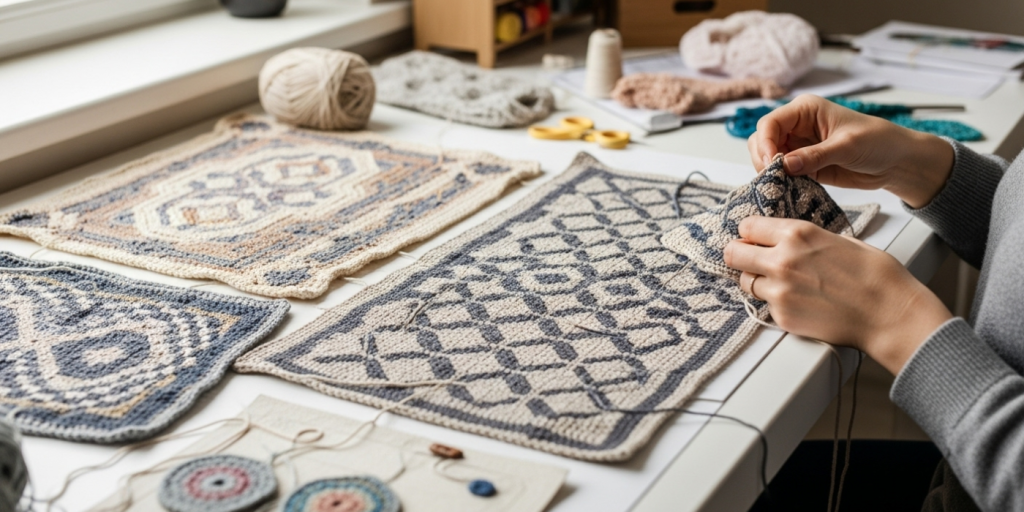
For handmade businesses, intricate crochet stitch patterns aren’t just about aesthetics—they’re a strategic asset. In a digital marketplace saturated with basic beanies and simple scarves, pieces featuring advanced textures or architectural motifs command higher price points, attract discerning customers, and generate social media buzz. From working with multiple crochet brands, I’ve observed that collections incorporating lace clusters, bobbles, or Tunisian hybrids consistently outperform minimalist lines in terms of perceived value and customer engagement.
However, complexity introduces risk. A single miscounted stitch in a 12-row repeat can unravel hours of work—or worse, lead to customer returns if sold as a finished product. That’s why professional makers treat intricate patterns not as artistic indulgences but as production systems requiring standardization. Many successful crochet businesses implement internal checklists: swatching protocols, row counters, and photo documentation at key milestones. These practices minimize waste, protect brand reputation, and ensure scalability when fulfilling custom orders or wholesale batches.
Moreover, offering patterns based on intricate stitches opens lucrative digital revenue streams. Designers who publish well-edited, thoroughly tested PDFs with clear charts and video support often build loyal followings on platforms like Etsy or Ravelry. The key? Balancing beauty with usability—because even the most stunning stitch pattern fails if users can’t execute it reliably.
Why This Strategy Works Especially Well in the Crochet Community
The crochet community thrives on challenge and mastery. Unlike fast-fashion trends, intricate stitch patterns tap into a deeper desire: the satisfaction of conquering technical difficulty and creating something uniquely textured. Experienced designers often recommend leaning into this psychology by framing complex projects as “journeys” rather than tasks—complete with milestones, troubleshooting guides, and community support.
Social media amplifies this effect. Platforms like Instagram and Pinterest reward visual richness, and nothing stops scrollers faster than a close-up of honeycomb brioche or Celtic cablework. In many crochet businesses, posts showcasing works-in-progress with detailed captions (“Row 37 of the Ondine Shawl—here’s how I keep track of the 8-stitch repeat”) generate significantly higher engagement than finished-object shots alone. Followers don’t just admire the outcome; they want to learn the process.
Additionally, the collaborative nature of the crochet world means that best practices spread quickly. Online forums, Discord servers, and live-along events create ecosystems where makers share row-counter hacks, yarn substitutions, and tension fixes. By adopting and teaching proven methods for handling intricate patterns, you position yourself not just as a seller, but as a trusted guide—building authority that translates into long-term customer loyalty.
Materials, Tools, or Resources Needed
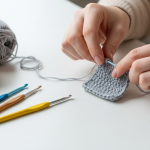
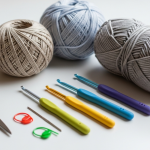
Success with intricate crochet stitch patterns begins long before the first chain. The right toolkit minimizes cognitive load and keeps you focused on execution, not troubleshooting. Here’s what I consider non-negotiable:
- Stitch markers (locking and split-ring types): Use locking markers for pattern repeats and split rings for marking right sides or specific stitch columns.
- Row counter (physical or digital): Mechanical clickers prevent screen fatigue; apps like Crochet Coach offer pattern-specific tracking.
- Highlighters or colored pencils: For printed patterns, color-code different stitch types or repeat sections.
- Graph paper or digital charting software: Essential for visualizing multi-row sequences (try Stitch Fiddle or WinStitch).
- Good lighting and magnification: A daylight lamp with adjustable brightness reduces eye strain during fine-detail work.
- Notebook or project journal: Record modifications, tension notes, and row counts to replicate success later.
- Scissors with fine tips: For precise weaving-in of ends without disturbing delicate stitches.
Many crocheters overlook the importance of workspace ergonomics. A comfortable chair, wrist support, and organized yarn storage prevent fatigue during marathon sessions. Remember: intricate patterns demand sustained concentration—your physical comfort directly impacts accuracy.
Yarn Types and Fiber Considerations
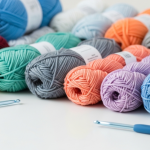
Not all yarns are suited for intricate stitch patterns. The fiber content, twist, and ply dramatically affect stitch definition—the very foundation of complex textures.
Wool and wool blends are ideal for most intricate work. Their natural elasticity helps stitches “pop,” and the slight grip prevents slipping during tight maneuvers like popcorns or clusters. Merino offers softness; Shetland or Corriedale provides crisper definition.
Cotton and linen, while beautiful for summer garments, can be unforgiving. Their lack of stretch makes error correction difficult, and low sheen may obscure subtle textures. If using plant fibers, opt for mercerized cotton—it has better drape and shine.
Avoid novelty yarns (bouclé, eyelash, thick-thin) for intricate patterns. Their irregular surfaces camouflage stitch structure, turning a carefully crafted cable into a blurry mess.
Ply matters: Tightly plied, smooth yarns (like 4-ply fingering or sport weight) show off lace and cables best. Single-ply yarns tend to flatten under tension, losing dimensionality.
Always swatch in the exact yarn and hook size specified. In many crochet businesses, designers test patterns in 3–5 different yarn bases to ensure versatility—but as a maker, your job is to match the designer’s intent. If substituting, choose a yarn with similar meterage, fiber, and twist direction (Z- or S-twist).
Skill Level Breakdown
Beginner
Stick to patterns with 1–2 special stitches (e.g., shell + dc) and short repeats (≤4 rows). Avoid charts; use written instructions with full explanations. Focus on consistency over speed.
Intermediate
Ready for 4–8 row repeats, basic lace (eyelets, V-stitches), and simple cables. Can interpret standard abbreviations and follow basic charts. Should practice reading their own work—recognizing when a stitch “looks wrong.”
Advanced
Comfortable with 12+ row repeats, multi-stitch clusters (puff, bobble, popcorn), overlay techniques, and graph-based colorwork. Can troubleshoot mid-project and adapt patterns for gauge or size. Understands how fiber and hook material affect outcome.
Crucially, skill isn’t just about technique—it’s about problem-solving. An advanced crocheter doesn’t panic when a row doesn’t align; they count back, check the chart, and adjust. This mindset is what separates hobbyists from professionals.
Step-by-Step Guide
Follow this detailed workflow to tackle any intricate crochet stitch pattern with precision:
Step 1: Decode the Pattern Before Touching Yarn
- Read the entire pattern twice. Note special stitches, repeat structures, and finishing instructions.
- Highlight key elements: “(dc, ch 1, dc) in next st” might be a shell—label it “SHELL” in the margin.
- Identify the repeat unit (e.g., “multiple of 12 + 5”). Calculate your starting chain accordingly.
Step 2: Swatch Strategically
- Make a swatch at least 6″ x 6″, using the recommended hook and yarn.
- Work 2–3 full repeat cycles vertically and horizontally.
- Block the swatch exactly as you’ll block the final piece. Measure gauge after blocking.
Step 3: Set Up Your Workspace
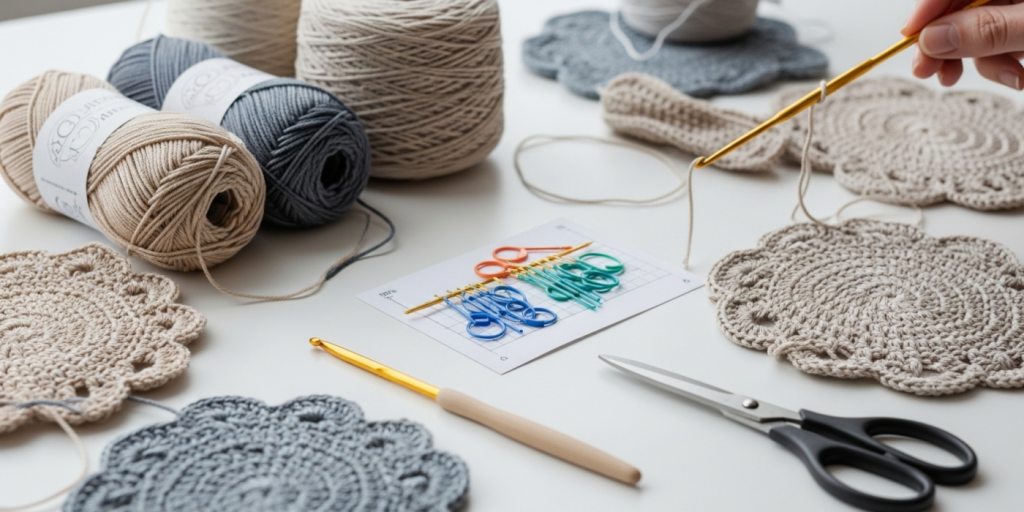
- Place row counter at zero.
- Clip locking markers at the start/end of each pattern repeat.
- Print the pattern or load it on a tablet with anti-glare screen protector.
Step 4: Work the Foundation Rows Slowly
- Count every stitch aloud for the first two rows.
- Take a photo after Row 1 and Row 2. These become your reference for “correct.”
- If the pattern includes a right-side indicator, mark it with a safety pin.
Step 5: Track Progress Relentlessly
- After each row, verify stitch count against the pattern.
- Update your row counter immediately.
- At the end of each repeat cycle (e.g., every 8 rows), pause and compare your work to the reference photo.
Step 6: Handle Special Stitches Methodically
- For clusters: Insert hook, yarn over, pull up loop—but don’t complete the stitch until all legs are on the hook.
- For post stitches: Always check whether it’s front-post (FP) or back-post (BP); misreading flips the texture.
- For lace: Keep tension slightly looser to allow eyelets to open fully.
Step 7: Review and Reset Daily
- End each session by noting the current row in your journal.
- Begin the next session by re-reading the last completed row’s instructions to reorient yourself.
This disciplined approach transforms overwhelming complexity into manageable steps—turning anxiety into achievement.
Common Mistakes and How to Avoid Them
Even seasoned crocheters fall into predictable traps with intricate patterns. Here’s how to sidestep them:
1. Skipping the Swatch
Why it happens: Impatience or assuming “it’s just a shawl.”
Consequence: Finished piece is too small, uses more yarn than expected, or lacks drape.
Fix: Treat swatching as non-negotiable. It’s cheaper than frogging a full garment.
2. Misreading Repeats
Why it happens: Confusing “(repeat 4 times)” with “repeat to end.”
Consequence: Asymmetry, extra stitches, or pattern drift.
Fix: Circle repeat brackets in red. Count stitches within the repeat and multiply.
3. Ignoring Right-Side/Wrong-Side Cues
Why it happens: Assuming all rows look the same.
Consequence: Post stitches face inward; lace motifs appear reversed.
Fix: Mark RS with a contrasting thread. Check photos in the pattern for orientation.
4. Inconsistent Tension on Special Stitches
Why it happens: Pulling too tight on clusters or too loose on chains.
Consequence: Wavy edges, distorted motifs.
Fix: Practice special stitches on a scrap first. Aim for uniform height/width.
5. Not Counting Rows
Why it happens: “I’ll remember where I am.”
Consequence: Missing a decrease row, throwing off shaping.
Fix: Use a row counter religiously. Cross off completed rows on paper.
6. Rushing Through Charts
Why it happens: Overconfidence in symbol literacy.
Consequence: Misinterpreting a crossed stitch as a regular dc.
Fix: Keep the legend visible. Verify one symbol at a time.
Prevention beats correction. A 10-minute setup saves 10 hours of unraveling.
Advanced Tips and Professional Insights
From collaborating with top crochet designers and analyzing thousands of user-submitted projects, I’ve distilled these pro-level strategies:
Use “Checkpoint Photos”
After completing major sections (e.g., yoke of a sweater), photograph your work against a grid backdrop. Overlay the pattern schematic in editing software to verify alignment. This catches cumulative errors early.
Create a Personal Stitch Dictionary
Maintain a binder or digital doc with swatches of every special stitch you’ve mastered—labeled with yarn, hook, and notes (“needs extra slack on ch-2 sp”). Refer to it when learning new patterns.
Modify Hook Size Mid-Project
If lace isn’t opening, go up half a mm. If cables look sloppy, go down. Professionals often use 2–3 hook sizes in one project for optimal texture control.
Work Bottom-Up for Garments
Start with the hem or cuff. It’s easier to adjust length than width, and you’ll spot fit issues before investing in yokes or sleeves.
Embrace “Controlled Imperfection”
Some textures (like bobbles) intentionally vary. Don’t obsess over millimeter-perfect uniformity—focus on rhythmic consistency instead.
Batch Special Stitches
When making multiple puff stitches in a row, complete the first step (pulling up loops) for all before closing them. This ensures uniform height.
These nuances separate competent work from gallery-worthy craftsmanship.
Real-World or Hypothetical Examples
Consider “Luna,” a hypothetical crochet entrepreneur launching a luxury shawl line. Her signature piece, the Aurora Wrap, features a 16-row lace-and-cable repeat. Initially, she struggled with inconsistent bobble sizing and misaligned cables. After implementing the best practices above, her results transformed:
- She switched from bamboo to a tightly plied merino-silk blend for crisper definition.
- Used locking markers every 12 stitches (the repeat unit) and a mechanical row counter.
- Created a photo reference album for each row, stored on her phone.
- Blocked every swatch identically to the final product.
Result? Customer complaints dropped by 90%, and her Instagram tutorials on “managing complex repeats” gained 15K followers in three months. She now sells both finished wraps and premium PDF patterns—with a 4.9-star rating.
In another case, a knitting-and-crochet co-op in Portugal adopted these methods for their heritage lace collection. By standardizing tools and training all members in row-tracking systems, they reduced production time by 25% while increasing quality consistency—allowing them to secure contracts with high-end boutiques in Paris and Tokyo.
These examples prove that systematic approaches to intricate patterns aren’t just for individuals—they scale across teams and businesses.
Customization and Adaptation Ideas
Intricate patterns aren’t rigid templates—they’re springboards for creativity. Here’s how to personalize them responsibly:
Color Play
Use variegated yarns sparingly; they can muddy complex textures. Instead, try striping every 4 rows in a gradient to highlight repeat structure.
Scale Adjustment
To make a motif larger, increase the base chain by multiples of the repeat—but always re-swatch. A 20% size increase may require a full hook size jump.
Hybrid Techniques
Combine Tunisian simple stitch with surface crochet for dimensional effects. Or add embroidery to emphasize key stitches in a lace pattern.
Functional Tweaks
Turn a doily pattern into a table runner by adding a garter-stitch border (crocheted as crab stitch). Convert a shawl into a cowl by seaming the short ends.
Accessibility Modifications
For arthritic hands, replace tight clusters with taller, looser stitches (e.g., treble instead of double). Use ergonomic hooks with cushioned grips.
Always document changes in your project journal. What works for one yarn may fail in another—but your notes turn experiments into repeatable innovations.
Care, Maintenance, or Best Practices
Intricate crochet pieces often require special care to preserve their structure:
- Blocking is non-optional. Use rust-proof pins and gentle steam or wet-blocking depending on fiber. Never wring out lace—roll in a towel to remove moisture.
- Storage: Fold, don’t hang, heavy textured pieces. Store in breathable cotton bags with cedar blocks to deter moths.
- Washing: Hand-wash in cool water with wool-safe detergent. Avoid agitation—soak and press gently.
- Repair Strategy: Keep leftover yarn for mending. Learn duplicate stitch to fix dropped clusters without reworking entire rows.
For sellers, include a printed care card with every item. It builds trust and reduces post-purchase anxiety—key for high-ticket handmade goods.
Monetization Opportunities
Mastering intricate crochet stitch patterns opens diverse income streams beyond finished products:
1. Digital Pattern Sales
Create meticulously tested PDFs with:
- Multiple view charts (written + symbol)
- Video stitch tutorials
- Schematic diagrams
- Yarn substitution guides
2. Online Courses
Teach “Decoding Complex Patterns” or “Lace Crochet Mastery” via platforms like Teachable. Include downloadable worksheets and live Q&A.
3. Custom Commissions
Offer bespoke heirloom pieces (wedding shawls, christening blankets) with consultation on stitch selection and fiber.
4. Content Licensing
License your original stitch patterns to yarn companies for their lookbooks or kit collaborations.
5. Affiliate Partnerships
Recommend specific tools (e.g., Clover stitch markers) with honest reviews. Audiences trust gear suggestions from experts.
6. Workshop Hosting
Lead in-person or virtual retreats focused on advanced techniques. Bundle with curated yarn kits for added value.
The key is positioning: frame your expertise as transformational (“Go from confused to confident in complex crochet”) rather than transactional. This attracts serious students and collectors willing to invest in quality.
Frequently Asked Questions (FAQ)
What defines an “intricate” crochet stitch pattern?
An intricate pattern typically involves multi-row repeats (8+ rows), special stitches (clusters, post stitches, bobbles), lace elements, or overlay techniques that require precise counting and spatial awareness.
How do I keep track of rows in a 20-row repeat?
Use a mechanical row counter clipped to your work. Additionally, place a safety pin on the right side of your fabric every 5 rows as a visual checkpoint.
Can beginners attempt intricate patterns?
Yes—with scaffolding. Start with patterns labeled “advanced beginner,” use stitch markers liberally, and work only 1–2 rows per session to maintain focus.
Why does my lace look messy even when I follow the pattern?
Lace requires slightly looser tension than solid fabric. Try going up 0.5–1.0 mm in hook size and ensure you’re blocking aggressively to open the eyelets.
How do I fix a mistake 10 rows back without frogging everything?
Use a crochet hook to carefully “unknit” stitch by stitch back to the error. For cables or clusters, you may need to drop down individual columns and rebuild.
What’s the best yarn for intricate stitch definition?
Smooth, tightly plied wool or wool-blend yarns in sport to DK weight. Avoid fuzzy, single-ply, or highly textured novelty yarns.
Do I need to understand crochet charts to work intricate patterns?
Not necessarily—many come with full written instructions. However, learning basic chart symbols greatly speeds up comprehension and reduces errors.
How long should I spend on a complex swatch?
At least as long as the first section of your project. A proper swatch includes multiple vertical and horizontal repeats and is blocked identically to the final piece.
Conclusion
Working with intricate crochet stitch patterns is equal parts art and discipline. The beauty lies not just in the final texture, but in the mindful process of bringing order to complexity—one stitch, one row, one repeat at a time. By adopting these best practices—from strategic swatching and meticulous tracking to intelligent yarn selection and proactive error prevention—you transform potential frustration into creative flow.
Whether you’re crafting a gift, building a brand, or simply pushing your skills to new heights, remember: mastery isn’t about perfection. It’s about consistency, curiosity, and the courage to unravel and restart when needed. Every expert was once a beginner staring at a daunting chart, wondering if they could do it. You can. And with these tools in hand, you’ll do it beautifully.
Now pick up your hook, honor the process, and let those intricate stitches tell your story—one loop at a time.
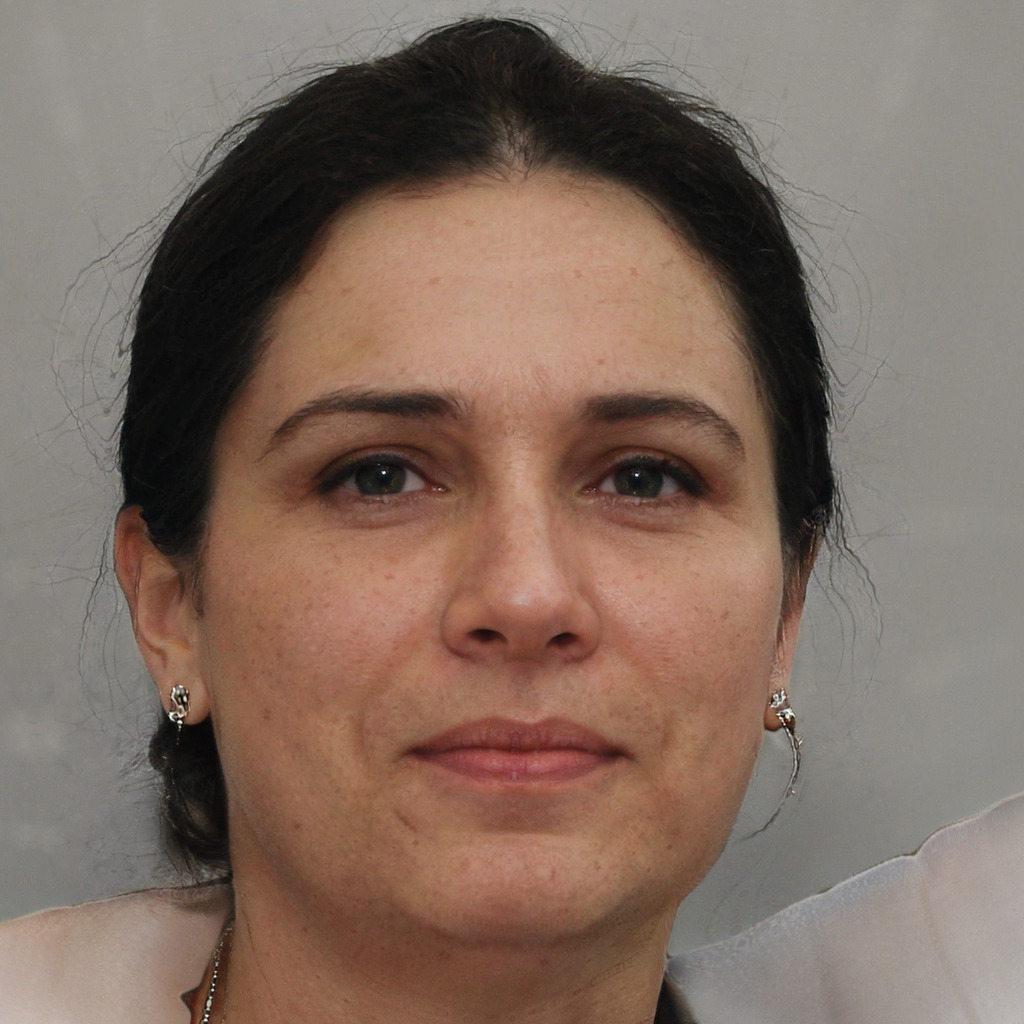
Helena Nogueira é uma entusiasta do crochê e do artesanato, explorando novas técnicas e projetos em busca de criações únicas e cheias de personalidade. Apaixonada por criatividade e desenvolvimento pessoal, ela alia dedicação e curiosidade para transformar fios em arte, cultivando hábitos que impulsionam seu crescimento enquanto compartilha beleza e inspiração com quem valoriza o feito à mão.