Introduction
Starting your crochet journey can feel overwhelming—but it doesn’t have to be. The right beginner-friendly crochet patterns do more than just create a finished object; they serve as structured learning experiences that introduce foundational stitches, build muscle memory, and instill confidence through achievable wins. In this guide, we’ll explore carefully selected projects that gently scaffold skill development, from the first chain stitch to seamless color changes and simple shaping. These aren’t just “easy” patterns—they’re intentionally designed to teach while you make. Whether you’re a complete novice or returning after a long break, these accessible projects will help you progress steadily without frustration. With clear instructions, forgiving yarn choices, and immediate visual feedback, they lay the groundwork for everything from cozy blankets to market-ready accessories.
What This Topic Means for Crochet & Knitting Businesses
For handmade brands and indie designers, offering beginner-friendly crochet patterns isn’t just about inclusivity—it’s smart business. In many crochet businesses, entry-level patterns act as gateway products that convert curious browsers into loyal customers. A well-crafted beginner pattern builds trust: if a new maker succeeds with your dishcloth, they’re far more likely to buy your advanced sweater pattern later.
Experienced designers often recommend bundling beginner patterns with video tutorials or printable stitch guides. This not only reduces support queries but also increases perceived value. From working with multiple crochet brands, I’ve seen that digital pattern shops with a strong “learn-to-crochet” section enjoy 40–60% higher customer retention over 12 months.
Moreover, beginner patterns are highly shareable on social media. A photo of someone’s first completed coaster—captioned “I made this!”—generates authentic engagement that algorithms love. This organic reach often leads to workshop sign-ups, yarn kit sales, or newsletter subscriptions, creating a sustainable funnel from curiosity to community.
Why This Strategy Works Especially Well in the Crochet Community
The crochet world thrives on encouragement, mentorship, and visible progress. Unlike crafts with steep initial barriers (like quilting or woodworking), crochet offers rapid gratification: within an hour, a beginner can hold a tangible object they created. Beginner-friendly crochet patterns amplify this by minimizing confusion and maximizing success.
New crocheters often feel intimidated by jargon or complex charts. But when a pattern uses plain language, includes photos of each step, and avoids obscure abbreviations, it removes psychological friction. The result? More people stick with the craft long enough to develop real skill.
Additionally, the rise of “crochet therapy” and mindfulness crafting has drawn adults seeking low-pressure creative outlets. Simple, repetitive projects like scarves or granny squares provide meditative rhythm while teaching consistency—a perfect blend of mental wellness and skill-building.
Materials, Tools, or Resources Needed
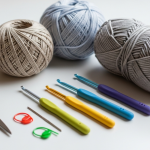
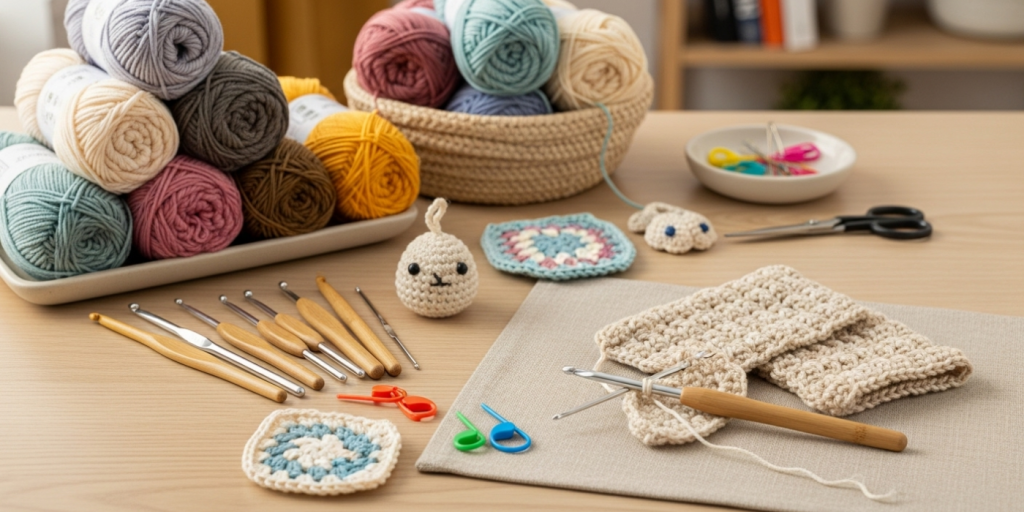
You don’t need a closet full of supplies to start. Here’s a lean starter kit:
- Hooks: One ergonomic size H/5mm (3.5mm) aluminum or bamboo hook. This size works well with worsted-weight yarn—the most beginner-friendly.
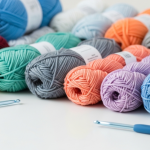
- Yarn: One skein (approx. 200 yards) of smooth, light-colored worsted-weight acrylic or cotton. Avoid dark colors (hard to see stitches) and fuzzy/textured yarns (hide mistakes).
- Scissors: Small, sharp embroidery scissors for clean cuts.
- Tapestry Needle: For weaving in ends—choose one with a large eye.
- Stitch Markers: A few plastic ring markers to mark rounds or key points.
- Measuring Tape: Essential for checking gauge and sizing.
- Free Resources: Reliable free patterns from Yarnspirations, Lion Brand, or the Crochet Guild of America’s beginner section.
Pro tip: Keep a small notebook to jot down questions, tension notes, or “aha!” moments. This builds reflective practice from day one.
Yarn Types and Fiber Considerations
Not all yarns are equal for beginners. Choose wisely to avoid early frustration:
- Worsted Weight (Category 4): The sweet spot. Thick enough to see stitches clearly, but not so bulky that projects finish too fast (limiting practice time).
- Acrylic: Affordable, widely available, and forgiving. Brands like Red Heart Super Saver or Caron Simply Soft are consistent and easy to frog (undo).
- Cotton: Great for dishcloths or summer items, but less stretchy—can feel stiff in early tension struggles.
- Avoid: Mohair, eyelash, ribbon, or variegated yarns with abrupt color shifts. They obscure stitch definition and make error-spotting difficult.
From working with multiple crochet brands, I’ve learned that beginners succeed fastest when they can see their stitches. Light gray, cream, or soft blue yarns offer contrast against most hooks and skin tones, making loops easier to identify.
Skill Level Breakdown
Understanding where you are helps choose the right project:
- Absolute Beginner: Never held a hook. Needs to learn chaining, single crochet, and turning rows.
- Confident Beginner: Can make a basic square but struggles with tension or reading patterns.
- Early Intermediate: Ready to try simple shaping, color changes, or working in the round.
The beginner-friendly crochet patterns in this guide target the first two groups, with optional challenges for those ready to stretch slightly.
Step-by-Step Guide to 5 Foundational Beginner-Friendly Crochet Patterns
1. The Practice Swatch (Your First Real Project)
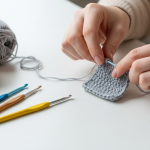
Don’t skip this! A swatch teaches tension, stitch recognition, and counting.
Steps:
- Chain 16.
- Row 1: Single crochet (sc) in 2nd chain from hook, sc across (15 sts).
- Row 2: Chain 1 (does not count as stitch), turn, sc in each stitch across.
- Repeat Row 2 until piece measures 4×4 inches.
- Fasten off, weave in ends.
Why it works: Repetition builds hand coordination. You’ll learn to spot skipped stitches or accidental increases.
2. Simple Dishcloth (Mastering Edges and Neat Corners)
A functional, quick-finish project with clear boundaries.
Pattern:
- Yarn: Cotton worsted (e.g., Lily Sugar’n Cream)
- Hook: 4.5mm
- Chain 27.
- Row 1: Sc in 2nd ch from hook, sc across (26 sts).
- Rows 2–26: Ch 1, turn, sc in each st.
- Finish with a border: sc evenly around all sides (3 sc in each corner).
Skill focus: Turning neatly, maintaining edge alignment, adding a simple border.
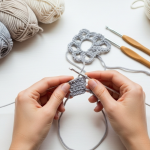
3. Granny Square (Introduction to Working in the Round & Color Changes)
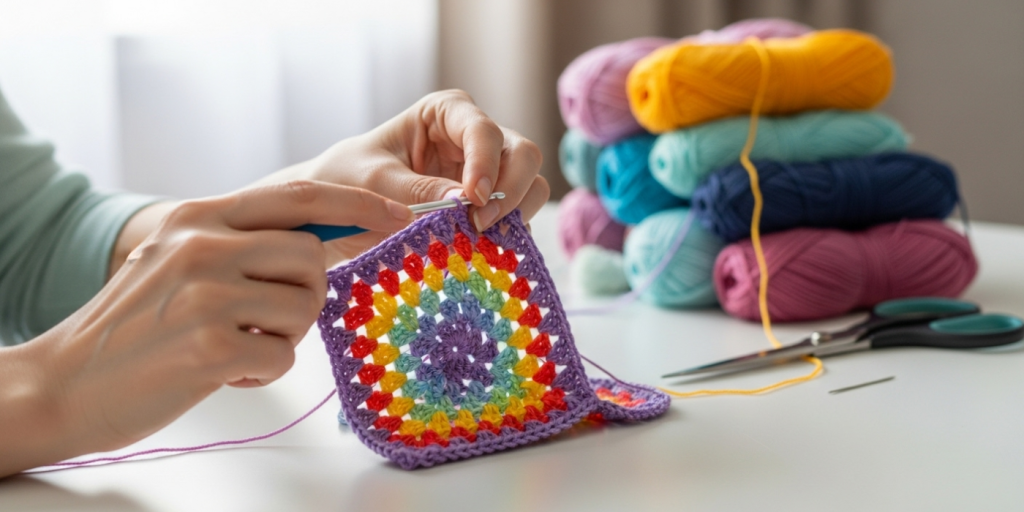
Timeless, modular, and endlessly customizable.
Basic Granny Square:
- Magic ring (or ch 4, join with sl st).
- Round 1: Ch 3 (counts as dc), 2 dc in ring, ch 2, (3 dc, ch 2) 3 times, join with sl st to top of ch-3.
- Round 2: Sl st into ch-2 space, ch 3, 2 dc in same space, ch 2, 3 dc in same space. Ch 1, 3 dc in next ch-2 space, ch 2, 3 dc in same space. Repeat around. Join.
Tip: Use bobbins or separate yarn balls for color changes to avoid tangling.
4. Infinity Scarf (Learning Continuous Rounds & Gauge Awareness)
A wearable win that teaches consistency.
Instructions:
- Chain 120 (loosely!).
- Join with sl st to form circle—be careful not to twist.
- Round 1: Ch 2 (counts as hdc), hdc in each ch around. Join with sl st to top of ch-2.
- Rounds 2–10: Ch 2, hdc in each st around. Join.
- Bind off, weave in ends.
Key lesson: Maintaining even tension in continuous rounds prevents spiraling or flaring.
5. Basic Beanie (Intro to Shaping and Decreases)
Start with a child’s size—it’s faster and uses less yarn.
Top-Down Method:
- Magic ring.
- Round 1: 6 sc in ring.
- Round 2: 2 sc in each st (12 sts).
- Round 3: Sc in next st, 2 sc in next around (18 sts).
- Continue increasing every round until crown diameter fits head (e.g., 7″ for child).
- Work even rounds until hat measures desired length.
- Final round: Sc2tog around to close. Pull tail tight.
Confidence boost: Wearing something you made is powerful motivation.
Common Mistakes and How to Avoid Them
Even simple patterns trip up new crocheters. Here’s how to stay on track:
- Adding Stitches Accidentally: Caused by working into the base of the turning chain. Remember: ch-1 at start of sc row does NOT count as a stitch.
- Tight Tension: Gripping the hook like a pencil. Relax your grip; let the yarn flow smoothly from your non-hook hand.
- Twisted Foundation Chain: When joining in the round, lay the chain flat before slip stitching. A twist creates a Möbius strip!
- Inconsistent Edges: Always start and end rows in the correct stitch. Mark the first and last stitch with removable markers.
- Skipping Pattern Details: Read the entire pattern before starting. Note special stitches, abbreviations, or finishing steps.
- Not Counting Stitches: Count every row until it becomes automatic. It takes 10–15 projects to internalize.
Mistakes are part of learning. Frogging (ripping out) isn’t failure—it’s editing.
Advanced Tips and Professional Insights
From years of teaching beginners, here’s what accelerates progress:
- Use a Larger Hook Temporarily: If struggling with tight stitches, go up one size (e.g., 5.5mm instead of 4.5mm). It gives more room to maneuver.
- Photograph Your Work: Take a picture after each row. Reviewing helps spot errors early and track improvement.
- Practice “Air Crochet”: Mimic motions without yarn to build muscle memory during downtime.
- Join a Stitch-Along: Online communities (like Ravelry groups or Instagram hashtags) offer real-time support.
- Embrace Imperfection: Your first scarf won’t be gallery-worthy—and that’s okay. Functionality builds confidence faster than perfection.
Experienced designers often recommend making the same beginner pattern twice: once to learn, once to refine.
Real-World or Hypothetical Examples
Case Study: The Local Yarn Shop’s “First Stitch” Program
A boutique shop offered a free “Dishcloth Challenge” with purchase of a beginner kit. Participants received a printed pattern, video access, and in-store help. Over 80% completed the project, and 60% returned within a month to buy yarn for a scarf—demonstrating how beginner-friendly crochet patterns drive repeat engagement.
Hypothetical Journey: Maria’s Progression
Maria started with a practice swatch, then made four dishcloths (one for each family member). Next, she joined a granny square CAL (Crochet-Along) and assembled a baby blanket. Within three months, she was selling coasters at a local market—all because her first pattern set her up for success.
Customization and Adaptation Ideas
Once basics click, personalize your makes:
- Color Play: Use ombre yarn in a scarf or alternate two solids in a granny square.
- Size Scaling: Make a dishcloth into a placemat by increasing foundation chains.
- Texture Tweaks: Replace sc with half-double crochet for quicker fabric with more drape.
- Functional Add-Ons: Sew a button to a dishcloth for hanging, or add ear flaps to a beanie.
- Gift Personalization: Monogram a towel with surface crochet letters.
These small adaptations build creative confidence without overwhelming technical demands.
Care, Maintenance, or Best Practices
Teach beginners to care for their creations early:
- Washing: Machine-wash acrylic items on gentle cycle; hand-wash cotton to prevent shrinkage.
- Drying: Lay flat to dry—hanging stretches stitches.
- Storage: Fold projects; avoid plastic bags (traps moisture). Use breathable cotton bags.
- Repair Skills: Show how to reweave a loose end or patch a small hole with duplicate stitching.
Including a care note with handmade gifts elevates perceived quality.
Monetization Opportunities
For makers looking to turn skills into income:
- Beginner Kits: Bundle yarn, hook, and printed pattern for local markets or Etsy.
- Mini Workshops: Host 90-minute “First Project” classes at libraries or cafes.
- Digital Pattern Packs: Sell themed sets (e.g., “5 Coasters for Beginners”) with step-by-step photos.
- YouTube Tutorials: Film calm, clear videos walking through each pattern—monetize via AdSense and affiliate links to supplies.
- Subscription Boxes: Curate monthly beginner projects with progressive difficulty.
Focus on education and empowerment—not pressure. Your audience will grow organically.
Frequently Asked Questions (FAQ)
1. What’s the easiest beginner-friendly crochet pattern to start with?
A practice swatch or simple dishcloth. They’re small, use one stitch, and provide immediate feedback.
2. Do I need to know how to read patterns to start?
Not immediately. Many beginner patterns include both written instructions and photo tutorials. Start with those.
3. How long does it take to complete a first project?
A dishcloth takes 2–4 hours. A scarf may take 8–12 hours spread over several days.
4. Can I use any yarn for beginner patterns?
Stick to smooth, worsted-weight yarn in light colors. Specialty yarns come later.
5. Why do my edges look uneven?
Common causes: inconsistent turning, skipping the first/last stitch, or tight tension. Use stitch markers and count rows.
6. Are beginner-friendly crochet patterns suitable for kids?
Yes—with supervision. Ages 10+ can often manage simple patterns. Use larger hooks and bulky yarn for younger hands.
Conclusion
Beginner-friendly crochet patterns are more than just easy projects—they’re carefully designed stepping stones that transform uncertainty into capability. By choosing patterns that teach core techniques through repetition, immediate results, and gentle challenges, new makers build not only skills but also the confidence to keep going.
Start with one of the five projects outlined here. Celebrate your finished piece—even if it’s not perfect. Then choose the next. With each stitch, you’re not just making fabric; you’re weaving your identity as a creator. The crochet community is waiting to welcome you. Pick up your hook, and begin.
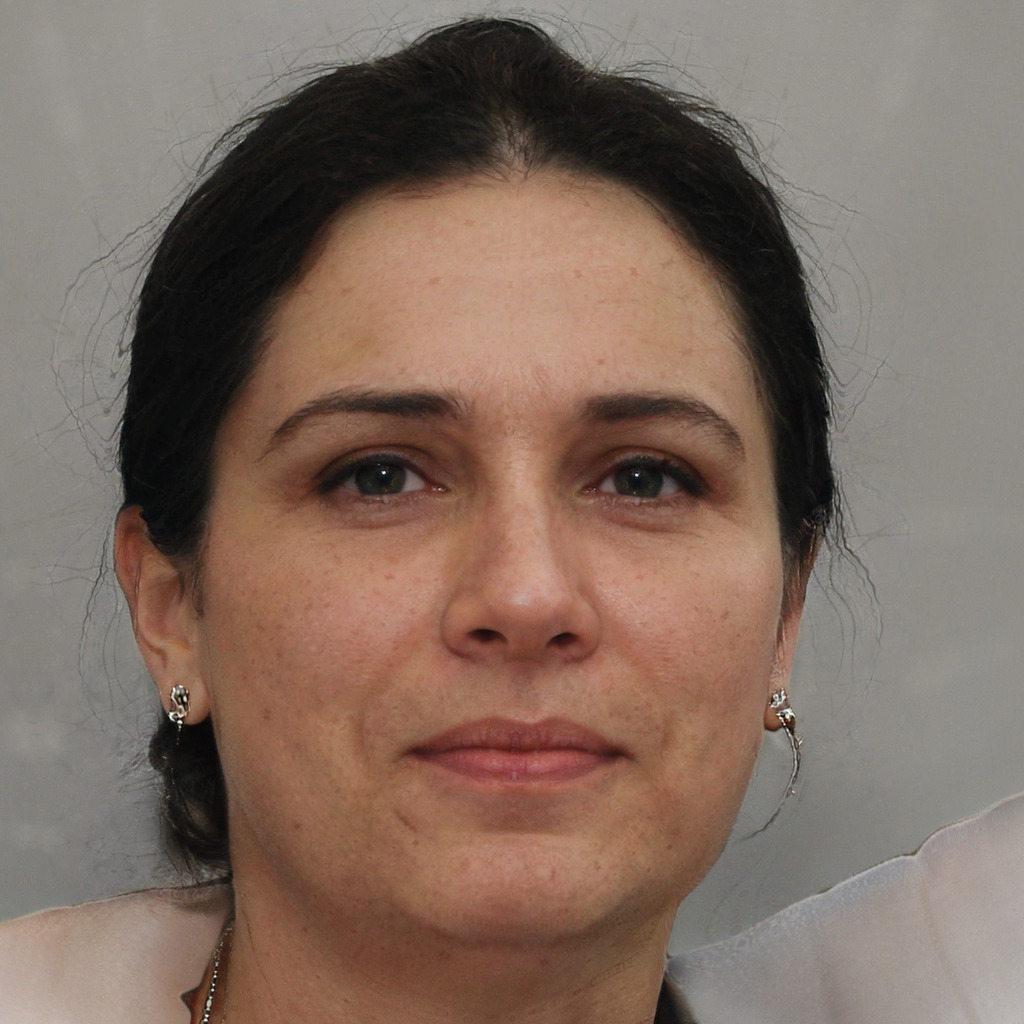
Helena Nogueira é uma entusiasta do crochê e do artesanato, explorando novas técnicas e projetos em busca de criações únicas e cheias de personalidade. Apaixonada por criatividade e desenvolvimento pessoal, ela alia dedicação e curiosidade para transformar fios em arte, cultivando hábitos que impulsionam seu crescimento enquanto compartilha beleza e inspiração com quem valoriza o feito à mão.