Introduction
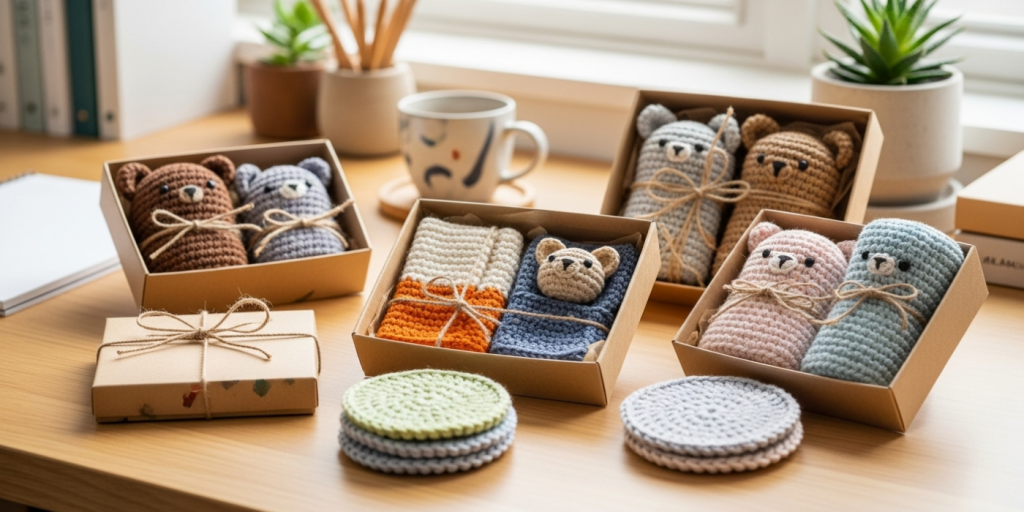
In a world increasingly dominated by mass-produced goods, easy crochet projects that make thoughtful handmade gifts offer something irreplaceable: human connection. A hand-crocheted item carries time, intention, and care—qualities that resonate deeply with recipients, whether it’s a cozy scarf for a new neighbor, a baby blanket for a friend’s newborn, or a set of dishcloths for a busy parent. What makes these gifts especially powerful is that they don’t require weeks of labor or advanced techniques. With the right pattern and a few hours of focused work, even beginner crocheters can create meaningful presents that feel luxurious and personal.
From working with multiple crochet brands and mentoring hundreds of makers, I’ve seen how accessible, well-chosen projects become gateway experiences—not just for gifting, but for building confidence and creative identity. The key lies in selecting designs that balance simplicity with visual appeal, use affordable materials, and align with the recipient’s lifestyle. This guide isn’t just a list of patterns; it’s a strategic roadmap to crafting gifts that are both easy to make and deeply appreciated—perfect for holidays, birthdays, housewarmings, or “just because” moments.
What This Topic Means for Crochet & Knitting Businesses
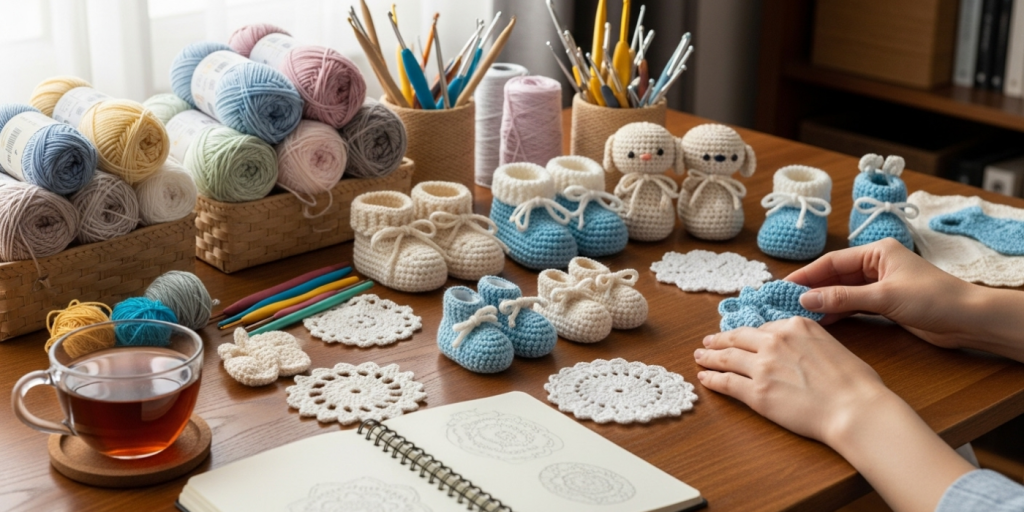
For handmade entrepreneurs, easy crochet projects that make thoughtful handmade gifts represent a high-demand, low-barrier product category. Unlike complex garments that require precise sizing and extensive customization, small gift items are scalable, photograph beautifully, and appeal to impulse buyers—especially during peak gifting seasons like Christmas, Mother’s Day, or bridal showers.
In many crochet businesses I’ve consulted, bestsellers aren’t elaborate afghans but practical, giftable staples: coffee cup cozies, spa headbands, or minimalist market bags. These items use minimal yarn (keeping material costs low), finish quickly (improving cash flow), and encourage repeat purchases (“I loved the soap saver—I’ll take three more for my sisters!”). Moreover, they serve as perfect entry points for customers new to handmade goods, who may later invest in pricier custom commissions.
Crucially, offering easy gift patterns also builds community trust. When followers see you sharing accessible, tested designs—even for free—they perceive you as generous and knowledgeable, not just sales-driven. This goodwill translates into newsletter sign-ups, social shares, and long-term brand loyalty.
Why This Strategy Works Especially Well in the Crochet Community
Crochet has a unique advantage in the gifting space: speed and versatility. Compared to knitting, crochet stitches work up faster, and the craft accommodates everything from stiff cotton for kitchenware to drapey bamboo for shawls—all with the same basic tools. This flexibility makes it ideal for last-minute gifts without sacrificing quality.
Experienced designers often recommend focusing on “small but special” projects because they lower the psychological barrier to gifting. Many people want to give handmade items but feel intimidated by time or skill constraints. An easy crochet gift—like a heart-shaped coaster or a textured washcloth—feels achievable, even for someone who only crochets occasionally.
From working with multiple crochet brands, I’ve observed that content centered on quick, giftable makes consistently outperforms generic tutorials. Why? Because it solves a real problem: “I need a present now, and I want it to mean something.” By meeting that need with clarity and empathy, you position yourself as a trusted resource—not just a pattern seller.
Materials, Tools, or Resources Needed
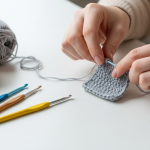
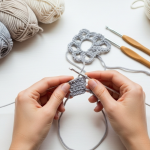
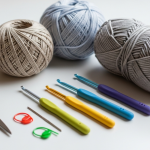
You don’t need a stocked studio to create beautiful handmade gifts. Here’s a lean, effective toolkit:
- Yarn: Medium-weight (worsted or DK) acrylic, cotton, or wool blends—readily available and budget-friendly.
- Crochet Hooks: Sizes H/5mm and G/4mm cover most gift projects. Ergonomic hooks reduce hand fatigue during repetitive stitching.
- Scissors: Sharp, small-bladed for clean cuts.
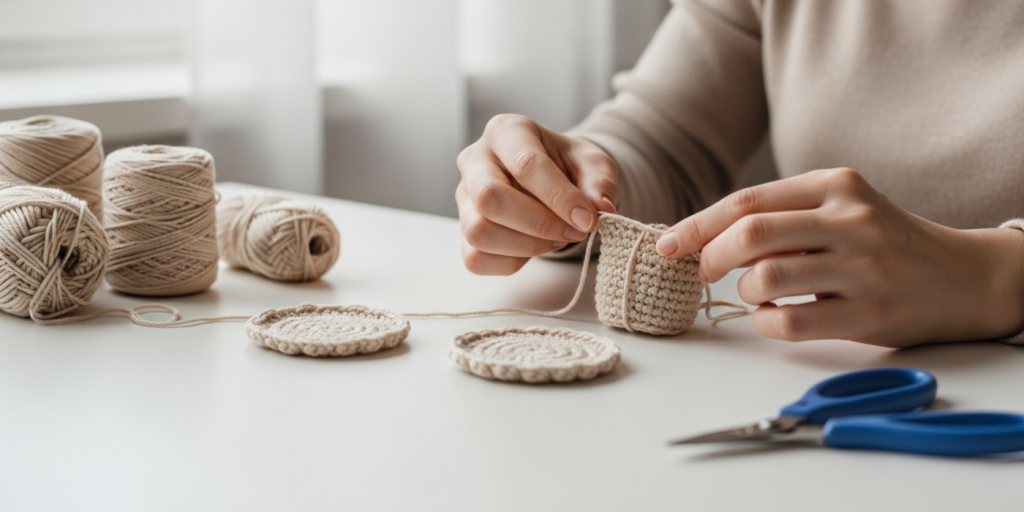
- Tapestry Needle: For weaving in ends neatly—essential for polished finishes.
- Stitch Markers: Helpful for tracking rounds in items like coasters or hats.
- Measuring Tape: Ensures consistency, especially for wearable gifts.
- Project Bag or Organizer: Keeps works-in-progress tidy and portable—ideal for gifting on the go.
Optional but useful:
- Yarn labels or tags for a professional touch
- Gift boxes or muslin bags for presentation
- Printable care cards explaining how to wash the item
Keep a “gift stash” of pre-wound yarn balls in neutral and seasonal colors—you’ll always be ready to start a new project.
Yarn Types and Fiber Considerations
Fiber choice directly impacts both usability and sentiment:
- Cotton: Perfect for kitchen and bath items (dishcloths, washcloths, soap savers). It’s absorbent, durable, and machine-washable. Choose mercerized cotton for extra sheen and smoothness.
- Acrylic: Soft, affordable, and colorfast—ideal for baby blankets, scarves, or toys. Opt for premium blends (like Caron Simply Soft) to avoid scratchiness.
- Wool or Wool Blends: Excellent for winter accessories (mittens, ear warmers). Naturally insulating and breathable, but check if the recipient is sensitive to lanolin.
- Bamboo or Tencel: Silky drape suits delicate gifts like lace bookmarks or lightweight shawls. Note: less elastic, so pair with tighter stitches.
- Recycled Cotton or Eco Yarns: Great for eco-conscious recipients. Market bags or produce sacks made from recycled fibers carry an added message of sustainability.
Always consider care requirements. A busy new parent won’t appreciate a hand-wash-only blanket, while a spa lover might cherish a delicate, air-dry face scrubbie. Match fiber to lifestyle.
Skill Level Breakdown (Beginner / Intermediate / Advanced)
Easy crochet projects that make thoughtful handmade gifts span all skill levels—but simplicity is key:
- Beginner: Focus on rectangles and simple shapes. Projects include dishcloths (single stitch repeats), basic beanies (magic ring + increases), and granny squares. Skills needed: chain, single/double crochet, joining rounds.
- Intermediate: Introduce texture and shaping. Try basketweave coasters, ribbed headbands, or amigurumi keychains. Skills: front/back post stitches, increasing/decreasing in pattern, color changes.
- Advanced: Refine finishing and customization. Create seamless infinity scarves with hidden joins, embroidered motifs on washcloths, or modular gift sets (e.g., matching soap bag + loofah). Skills: invisible seams, surface crochet, gauge adjustment.
The beauty of gifting is that even beginner projects feel special when made with care. Don’t underestimate the power of a perfectly square washcloth in a soothing color—it’s often more cherished than a technically complex piece.
Step-by-Step Guide: Crafting a Luxe Spa Washcloth Set (Beginner-Friendly)
This classic gift combines utility, elegance, and speed. You’ll make a set of two washcloths with a subtle textured border.
Materials:
- 2 skeins (approx. 100g each) of 100% cotton worsted weight yarn (e.g., Lily Sugar’n Cream)
- Size H/5mm crochet hook
- Tapestry needle
Gauge:
16 sc x 18 rows = 4” square (blocking not required for this project)
Instructions:
Step 1: Foundation Chain
Chain 30 (or adjust for desired size; 28–32 chains yield standard washcloth dimensions).
Step 2: Work Body in Single Crochet
- Row 1: Sc in second ch from hook and across (29 sc).
- Rows 2–28: Ch 1, turn, sc in each st across.
Tip: Keep edges neat by working the first sc into the same stitch as the turning chain.
Step 3: Add Textured Border (Optional but Recommended)
- Round 1: Ch 1, do not turn. Sc evenly around all four sides—place 3 sc in each corner to prevent curling. Join with sl st to first sc.
- Round 2: Ch 1, sc in each st around, again placing 3 sc in corners. Join.
- Round 3 (Texture): *Ch 3 (counts as dc), skip next st, sc in following st; repeat from * around, ending with sl st to top of ch-3. This creates a delicate shell edge.
Step 4: Finish
Fasten off, weave in ends securely. Repeat for second washcloth.
Step 5: Presentation
Roll both cloths, tie with a ribbon, and tuck in a bar of artisan soap. Add a tag: “Handmade with care—gentle on skin, tough on grime.”
Total time: ~1.5 hours per set. Cost: under $6.
Common Mistakes and How to Avoid Them
Even simple gifts can go wrong without attention to detail:
Mistake 1: Uneven Edges
Cause: Inconsistent turning or skipping first/last stitches.
Fix: Always work into the turning chain space, and count stitches every few rows.
Mistake 2: Too Small or Large
Cause: Ignoring gauge or recipient needs.
Fix: Measure the intended user (e.g., head circumference for hats) or use standard dimensions (washcloths: 8–10”, scarves: 60–70” long).
Mistake 3: Scratchy or Stiff Fabric
Cause: Wrong fiber or tight tension.
Fix: Swatch and wash your test piece. If stiff, go up a hook size or choose softer yarn.
Mistake 4: Visible Ends or Loose Threads
Cause: Rushed finishing.
Fix: Weave ends in opposite directions for 1–2 inches. Trim close but not flush.
Mistake 5: Boring Color Choices
Cause: Defaulting to neutrals without considering personality.
Fix: Observe the recipient’s home decor or wardrobe. Love bold prints? Try a variegated yarn. Prefer calm? Go for heathered gray or sage green.
Mistake 6: Poor Presentation
Cause: Tossing the gift in a plastic bag.
Fix: Wrap thoughtfully. Even brown paper tied with twine elevates perception.
Remember: the “easy” in easy crochet projects that make thoughtful handmade gifts refers to construction—not effortlessness in care or presentation.
Advanced Tips and Professional Insights
Elevate simple makes with pro-level touches:
- Custom Labels: Design a small woven or printed tag with your maker name or a sweet message (“Made for Sarah – December 2026”).
- Scent Infusion: Lightly spritz cotton items with linen spray before gifting (test for staining first).
- Modular Sets: Pair related items—a coffee cozy + matching mug rug, or a headband + fingerless gloves in coordinating colors.
- Seasonal Palettes: Stock yarn in holiday-specific hues (burgundy/gold for Christmas, pastels for Easter) to streamline production.
- Batch Production: Make multiples at once. Crocheting five identical dishcloths is faster than switching patterns five times.
- Hidden Personalization: Work the recipient’s initial into a corner using surface slip stitch—subtle but meaningful.
From working with multiple crochet brands, I’ve learned that perceived value comes from details, not complexity. A neatly finished edge and thoughtful packaging often matter more than intricate stitches.
Real-World or Hypothetical Examples
Consider “Maya,” a part-time crocheter who wanted to give meaningful holiday gifts without breaking her budget. She chose three easy crochet projects that make thoughtful handmade gifts:
- Coffee Cup Cozies for her coworkers (using up stash yarn, 20 minutes each)
- Mini Amigurumi Hearts for her nieces (stuffed with polyester fiberfill, safety eyes)
- Textured Headbands for her book club friends (in their favorite colors)
She spent under $30 total and received heartfelt thanks—especially for the cozies, which one colleague called “the highlight of my morning routine.”
In another case, a small Etsy shop specializing in self-care kits bundled handmade washcloths, soap savers, and loofahs into “Spa Sunday” boxes. By pricing the set at $28 (vs. $8 for individual items), they increased average order value by 250%—all using beginner-friendly patterns.
These examples prove that thoughtfulness, not technical difficulty, drives emotional impact.
Customization and Adaptation Ideas
Make each gift uniquely theirs:
- Color Psychology: Choose hues based on personality—calm blues for stressed friends, energizing oranges for creatives.
- Add Embellishments: Sew on a button, embroider a tiny star, or attach a wooden bead tassel.
- Size Adjustments: Make a child-sized version of an adult pattern (e.g., mini scarves for toddlers).
- Themed Sets: “New Home” kit (dishcloths + pot holders), “New Baby” (booties + lovey), “Graduate” (bookmark + laptop sleeve).
- Upcycle Yarn: Use leftover yarn from big projects to create matching accessories—zero waste, maximum charm.
Customization transforms generic items into heirlooms. A washcloth becomes “the one Grandma made me” when it’s in your favorite shade of lavender.
Care, Maintenance, or Best Practices
Ensure your gifts last—and reflect well on you:
- Include Care Instructions: Attach a small card: “Machine wash cold, tumble dry low” or “Lay flat to dry.”
- Pre-Wash Items: Especially cotton or wool, to prevent shrinkage surprises.
- Avoid Delicate Fibers for High-Use Items: Don’t use mohair for dishcloths—it pills instantly.
- Reinforce Stress Points: Double-stitch handles on market bags or ear loops on masks.
- Store Properly Before Gifting: Keep in breathable cotton bags, not plastic, to avoid mustiness.
A well-cared-for gift continues to remind the recipient of your kindness—long after the occasion passes.
Monetization Opportunities
Easy crochet projects that make thoughtful handmade gifts are goldmines for ethical, scalable income:
- Pattern Bundles: Sell themed collections (“10 Last-Minute Gifts Under 2 Hours”) as PDF downloads.
- Finished Goods: Offer ready-made sets on Etsy or at local markets—price based on time + materials + emotional value.
- Workshops: Teach “Gift-Making Crash Courses” online or in-person, focusing on speed and presentation.
- Subscription Boxes: Curate monthly mini-kits with yarn, hooks, and exclusive patterns for quick gifts.
- Wholesale to Boutiques: Pitch curated gift lines to gift shops, especially around holidays.
- Digital Planners: Create printable gift trackers (“Who I’m Making For + Deadline”) as low-cost digital products.
Remember: monetization thrives on solving problems. Your audience doesn’t just want patterns—they want confidence they can create something beautiful in time.
Frequently Asked Questions (FAQ)
Q1: What are the fastest easy crochet gifts to make?
A: Dishcloths (1 hour), coffee cozies (30 mins), and simple headbands (45 mins). All use basic stitches and minimal yarn.
Q2: Can beginners really make impressive gifts?
A: Absolutely. Clean finishing, thoughtful color choices, and nice packaging matter far more than complex stitches.
Q3: How much should I charge for handmade crochet gifts?
A: Calculate: (Yarn cost + 3x your hourly rate). A $3 washcloth taking 1 hour at $15/hour = $18 retail. Value the time and care.
Q4: What yarn is safest for baby gifts?
A: 100% cotton or acrylic labeled “baby-safe” (OEKO-TEX certified). Avoid wool if allergies are unknown, and never use small detachable parts.
Q5: How do I avoid running out of yarn mid-project?
A: Weigh your yarn before starting. Most small gifts use 50–100g. Buy an extra skein if dye lots vary.
Q6: Are there no-sew crochet gift ideas?
A: Yes! Seamless infinity scarves (joined with slip stitch), magic ring amigurumi, and continuous round coasters require no sewing.
Conclusion
Easy crochet projects that make thoughtful handmade gifts are more than just crafts—they’re vessels of care, creativity, and connection. In a hurried world, taking the time to make something by hand sends a powerful message: You matter enough for me to slow down. And the best part? You don’t need years of experience or expensive supplies to create something truly special.
Whether you’re making for loved ones or building a small business, focus on intention over intricacy. A well-chosen color, a neatly woven end, a handwritten note—these details transform simple stitches into lasting memories. So pick up your hook, choose a pattern that sparks joy, and start stitching. Your next handmade gift might just become someone’s most treasured possession.

Helena Nogueira é uma entusiasta do crochê e do artesanato, explorando novas técnicas e projetos em busca de criações únicas e cheias de personalidade. Apaixonada por criatividade e desenvolvimento pessoal, ela alia dedicação e curiosidade para transformar fios em arte, cultivando hábitos que impulsionam seu crescimento enquanto compartilha beleza e inspiração com quem valoriza o feito à mão.