Introduction
Knowing how to price crochet projects for profit and fair value is one of the most critical—and often overlooked—skills for any handmade business owner. Too many talented crocheters undervalue their work, charging only for materials or setting prices based on what “feels right,” only to burn out from exhaustion and financial strain. Others overprice without justification, deterring customers and damaging credibility. The truth is, pricing isn’t just math—it’s a strategic blend of cost analysis, market awareness, perceived value, and self-respect.
This comprehensive guide cuts through the guesswork. You’ll learn proven, real-world methods used by successful handmade brands to calculate prices that cover costs, reward time, reflect quality, and resonate with customers. Whether you sell finished goods, custom commissions, or digital patterns, this article delivers actionable frameworks grounded in years of experience running and consulting for crochet businesses. By the end, you’ll have the confidence to price your work fairly—not just to survive, but to thrive.
What This Topic Means for Crochet & Knitting Businesses
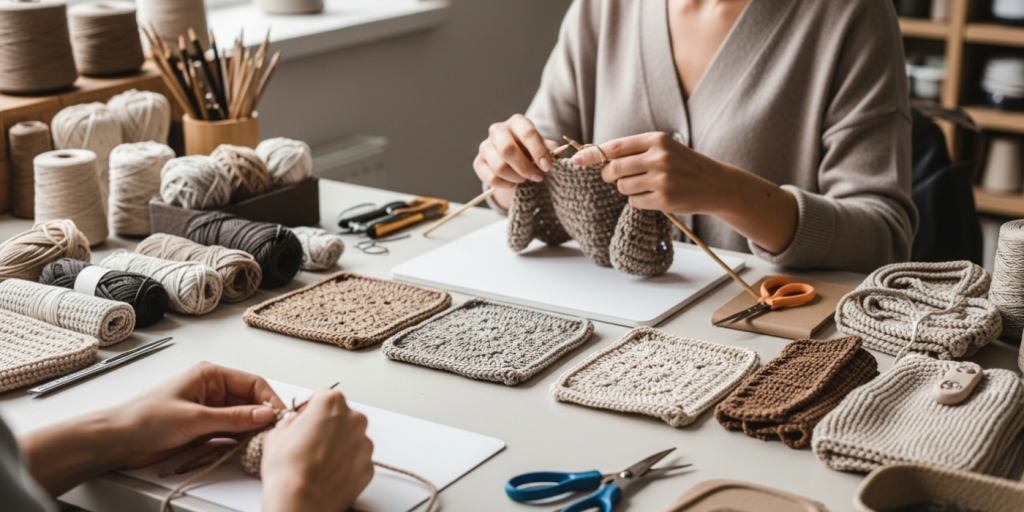
For handmade entrepreneurs, pricing directly impacts sustainability, scalability, and brand perception. Underpricing may drive short-term sales but erodes long-term viability; overpricing without clear value justification leads to empty inventory and lost trust. In contrast, fair, transparent pricing builds customer loyalty, supports consistent income, and positions your brand as professional and reliable.
From working with multiple crochet brands over the past decade, I’ve seen firsthand how strategic pricing transforms struggling side hustles into full-time livelihoods. One maker increased her net profit by 140% not by selling more—but by raising prices using a structured cost-plus model and clearly communicating the craftsmanship behind each piece. Another shifted from discounting to premium positioning by bundling care instructions, branded packaging, and customization options—justifying higher prices through enhanced experience.
In many crochet businesses, the biggest barrier to growth isn’t product quality or marketing—it’s the fear of charging what the work is truly worth. Overcoming this mindset is the first step toward building a resilient, respectful business.
Why This Strategy Works Especially Well in the Crochet Community
The crochet community is uniquely positioned to embrace value-based pricing because handmade items carry inherent emotional and narrative weight. Customers don’t just buy a beanie—they buy hours of skilled labor, sustainable materials, and a story of care. Unlike mass-produced goods, each crochet piece is one-of-a-kind, even when made from the same pattern.
Experienced designers often recommend framing pricing around three pillars: time, materials, and intangibles (like design, customization, and emotional resonance). This approach resonates deeply with conscious consumers who prioritize ethics, artistry, and connection over convenience.
Moreover, platforms like Etsy, Instagram, and craft fairs allow makers to share their process—showing the hand-dyed yarn, the blocking stage, the careful seaming—which naturally justifies higher prices. When customers see the journey behind the product, they’re more willing to pay fairly. In online communities, transparent pricing discussions also reduce comparison-driven anxiety and foster mutual support among makers.
Materials, Tools, or Resources Needed
You don’t need complex software to price effectively—but a few simple tools ensure accuracy and consistency.
Essential Tools:
- Time-tracking app or notebook: Record hours spent per project (including design, sourcing, making, finishing, and photography).
- Digital scale: Weigh yarn used to calculate exact material cost, especially for partial skeins.
- Spreadsheet template: Track materials, labor, overhead, and final price for each product line.
- Pricing calculator worksheet: Many free templates exist online (e.g., from SCORE or Etsy Seller Handbook).
Recommended Resources:
- Craft Yarn Council’s wholesale/retail guidelines: Offers industry benchmarks.
- Local minimum wage laws: Use as a baseline for valuing your time—never go below it.
- Competitor research log: Document similar products’ prices, features, and customer reviews.
- Business expense tracker: Apps like QuickBooks Self-Employed or Wave help allocate overhead fairly.
Keep all records organized by product type—this data becomes invaluable when scaling or applying for craft show booths.
Yarn Types and Fiber Considerations
While yarn choice doesn’t dictate pricing alone, it significantly influences perceived value and cost structure.
High-Value Fibers (Justify Premium Pricing):
- Merino wool: Soft, breathable, and luxurious—ideal for wearables. Costs $25–$40 per 100g.
- Silk or bamboo blends: Add sheen and drape to shawls or scarves. Often priced 20–30% above acrylic.
- Hand-dyed or small-batch yarns: Unique colorways signal exclusivity. Can command 2–3x commercial yarn prices.
Budget-Friendly Options (Require Volume or Efficiency):
- Premium acrylics (e.g., Lion Brand, Paintbox): Durable and washable, but lower perceived value. Best for baby items or home décor sold at accessible price points.
- Cotton: Great for dishcloths or summer tops, but heavy and less elastic—may increase labor time due to stiffness.
In many crochet businesses, product lines using natural fibers consistently achieve higher margins and customer satisfaction, even at elevated prices, because buyers associate them with quality and care.
Never hide your yarn choices—list fiber content prominently. Transparency builds trust and justifies cost differences.
Skill Level Breakdown (Beginner / Intermediate / Advanced)
Your experience level should inform—not limit—your pricing strategy.
Beginner:
- May lack confidence in valuing time.
- Best approach: Use a simple formula (e.g., Materials + (Hours × $15) + 20% markup).
- Focus on small, quick-turnaround items (coasters, keychains) to build pricing confidence.
- Avoid competing on price—emphasize handmade charm instead.
Intermediate:
- Understands gauge, tension, and finishing quality.
- Can implement tiered pricing (e.g., basic vs. personalized versions).
- Ready to factor in design time and overhead.
- Should track time meticulously to avoid undercharging.
Advanced:
- Commands premium rates for original designs, custom sizing, or intricate techniques (e.g., overlay crochet, colorwork).
- Uses value-based pricing: “What is this worth to my ideal customer?”
- Bundles services (e.g., gift wrapping, handwritten note) to increase average order value.
- May offer wholesale or licensing, requiring separate pricing structures.
From teaching pricing workshops, I’ve found that intermediate makers who start tracking time often realize they’ve been earning less than $5/hour—and adjust accordingly.
Step-by-Step Guide to Pricing Crochet Projects for Profit and Fair Value
Follow this detailed, field-tested method to set confident, sustainable prices.
Step 1: Calculate Direct Material Costs
Weigh the yarn used (not just the skein purchased).
Example:
- Skein cost: $8.00 for 200g
- Used: 120g
- Material cost = (120 ÷ 200) × $8.00 = $4.80
Include:
- Stitch markers, buttons, zippers
- Packaging (boxes, tissue paper, stickers)
- Shipping supplies (if included in product price)
Step 2: Track and Value Your Time
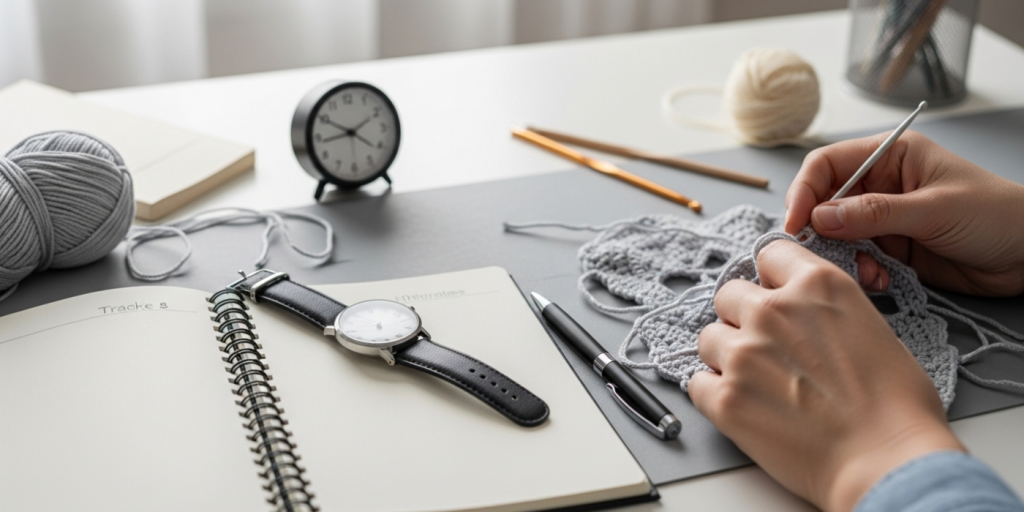
Record every minute:
- Design or pattern selection
- Swatching and gauge testing
- Actual crocheting
- Seaming, blocking, weaving ends
- Photography and listing creation
Assign an hourly rate. Never go below your local minimum wage. Many professionals use $20–$50/hour based on skill and market.
Example:
- Total time: 3.5 hours
- Hourly rate: $25
- Labor cost = 3.5 × $25 = $87.50
Step 3: Allocate Overhead Costs
Overhead includes expenses not tied to one item but essential to your business:
- Website fees (Etsy, Shopify)
- Marketing (ads, business cards)
- Utilities (lighting, internet during work hours)
- Equipment depreciation (hooks, cameras)
Calculate monthly overhead, then divide by number of items you expect to sell.
Example:
- Monthly overhead: $150
- Expected sales: 30 items
- Overhead per item = $150 ÷ 30 = $5.00
Step 4: Apply a Profit Margin
Profit ensures reinvestment and growth. A common benchmark is 30–50% above total costs.
Total Cost = Materials + Labor + Overhead
= $4.80 + $87.50 + $5.00 = $97.30
Add 40% profit:
$97.30 × 1.40 = $136.22
Round to $136 or $139 for psychological pricing.
Step 5: Benchmark Against the Market
Research 5–10 similar items:
- Same category (e.g., chunky blanket)
- Similar size, fiber, and detail level
- Sold on comparable platforms
If your price is 20% higher, ask:
- Do I offer better materials?
- Faster shipping?
- Customization?
- Better photos or branding?
If not, refine your offer—or accept that you’re in a different market segment.
Step 6: Test and Iterate
Start with a small batch at your calculated price. Monitor:
- Conversion rate (views to sales)
- Customer questions (“Is this worth it?”)
- Profit after fees and taxes
Adjust only if data shows consistent resistance—not from one hesitant buyer.
Common Mistakes and How to Avoid Them
Even seasoned sellers fall into these traps.
1. Charging Only for Materials
Result: Earning $2–$3/hour.
Fix: Always include labor and overhead. Your time is your most valuable asset.
2. Using the “Multiply by 2” Rule Blindly
Problem: Ignores actual time investment. A 2-hour scarf and 20-hour sweater shouldn’t both use the same multiplier.
Fix: Use activity-based costing—price per project, not per skein.
3. Ignoring Platform Fees
Reality: Etsy takes ~9% (including payment processing).
Fix: Factor fees into your final price or list them separately if allowed.
4. Underpricing to “Be Competitive”
Outcome: Race to the bottom; attracts bargain hunters, not loyal customers.
Fix: Compete on value, not price. Highlight your unique process or materials.
5. Not Raising Prices Over Time
Consequence: Inflation erodes profit; skill improvements go unrewarded.
Fix: Review prices quarterly. Increase by 5–10% annually or after major skill upgrades.
In many crochet businesses, the #1 reason for closure isn’t lack of sales—it’s chronic underpricing leading to burnout.
Advanced Tips and Professional Insights
Go beyond basics with these expert strategies.
Bundle to Increase Perceived Value
Sell a “Cozy Set” (beanie + scarf + gloves) for $120 instead of $50 each. Customers feel they’re saving, while you protect margins.
Offer Tiered Pricing
- Basic: Standard size, solid color ($80)
- Premium: Custom size, hand-dyed yarn ($120)
- Luxury: Gift box, monogram, express shipping ($160)
Use Psychological Pricing
$89 feels significantly less than $90—even though it’s not. Test $X9 vs. round numbers.
Communicate Value Explicitly
In product descriptions, include:
“Handmade with 100% merino wool sourced from ethical farms. Each stitch is carefully blocked for perfect drape. Includes care guide and reusable storage bag.”
Experienced designers often recommend publishing a “Why My Prices Reflect Fair Value” page on your website—it reduces objections and attracts aligned customers.
Real-World or Hypothetical Examples
Consider “Wool & Whimsy,” a hypothetical Etsy shop selling crochet baby blankets. Initially, the owner priced at $45 (materials + $10/hour). She worked 60 hours/week but earned less than minimum wage.
After implementing the step-by-step method:
- Materials: $18 (organic cotton)
- Labor: 4 hours × $25 = $100
- Overhead: $6
- Total cost: $124
- With 40% profit: $174
She updated her listings with:
- Video showing the softness and construction
- Comparison to fast-fashion alternatives
- Care instructions and heirloom potential
Result? Sales dropped slightly—but profit tripled. She now works 25 hours/week and earns more than before.
Another example: A designer offered custom wedding shawls. Instead of charging $200 flat, she introduced three tiers:
- Standard: $220
- Personalized initials: $280
- Matching bridesmaid set (3 shawls): $750
Revenue increased by 220% in six months—proof that value-based pricing drives both fairness and profit.
Customization and Adaptation Ideas
Tailor your pricing to your niche and goals:
For Craft Fairs:
Include booth fee and travel time in overhead. Offer “show-only” bundles to boost average sale.
For Commissions:
Charge a 50% non-refundable deposit. Add rush fees for deadlines under 2 weeks.
For Digital Patterns:
Price based on complexity and support offered:
- Simple: $4–$6
- Intermediate: $7–$9
- Advanced with video: $10–$15
For Subscription Boxes:
Use cost-per-box + 50% margin. Include exclusive patterns to justify recurring value.
From working with multiple crochet brands, I’ve seen that makers who align pricing with customer experience (not just production cost) build the most loyal followings.
Care, Maintenance, or Best Practices
Protect your pricing integrity with these habits:
Document Everything
Keep a master spreadsheet with:
- Product name
- Materials used (with cost)
- Time logged
- Final price
- Profit margin
Review monthly to spot inefficiencies.
Update Seasonally
Yarn prices fluctuate. Re-calculate costs every 6 months.
Never Discount Core Products
Instead, offer limited-time bundles or free shipping thresholds. Discounts train customers to wait for sales.
Best Practice: Always state your pricing philosophy in your “About” page. Example:
“I price to honor my craft, sustain my small business, and deliver heirloom-quality pieces you’ll cherish for years.”
Monetization Opportunities
Smart pricing unlocks diverse revenue streams:
1. Custom Commissions
Charge 1.5–2x standard pricing for personalized sizing, colors, or motifs.
2. Pattern Licensing
Sell commercial-use licenses to small brands for $100–$500/year—based on your pattern’s complexity and market demand.
3. Workshops
Teach others to price their work. Charge $30–$75 per student for a 2-hour virtual class.
4. Wholesale
Offer shops 50% off retail—but ensure your retail price already includes that margin. Never undercut your own store.
5. Membership Community
Create a Patreon offering monthly pricing templates, live Q&As, and vendor discounts. Charge $8–$15/month.
In many crochet businesses, education (teaching pricing) now generates more stable income than product sales alone.
Frequently Asked Questions (FAQ)
1. How do I price crochet projects for profit and fair value?
Use a formula that includes materials, labor (at a fair hourly rate), overhead, and a 30–50% profit margin. Always benchmark against similar quality products.
2. What is a fair hourly rate for crochet work?
At minimum, your local minimum wage. Most professionals charge $20–$50/hour based on skill, speed, and market demand.
3. Should I charge more for custom orders?
Yes—typically 1.5x to 2x your standard price to account for extra communication, design time, and risk.
4. How do I explain high prices to customers?
Focus on value: materials, time, care, and uniqueness. Use storytelling in product descriptions and behind-the-scenes content.
5. Can I raise prices on existing products?
Yes—gradually and transparently. Announce updates as “improved materials” or “expanded customization.”
6. What if no one buys at my new price?
First, ensure your branding and photos match your price point. If still no sales, you may be targeting the wrong audience—not overpricing.
7. How do I price digital crochet patterns?
Base on complexity: $4–$6 for simple, $7–$9 for intermediate, $10–$15 for advanced with tutorials. Include lifetime updates to add value.
8. Do I include Etsy fees in my price?
Yes—either build them into your final price or list them separately if your platform allows. Never absorb them silently.
Conclusion
Learning how to price crochet projects for profit and fair value isn’t just about numbers—it’s about respect. Respect for your time, your skill, your materials, and your customers’ intelligence. When you price with intention, you attract buyers who value craftsmanship over convenience and are willing to invest in pieces that last.
Start small: pick one product, run the numbers, and update your listing. Notice how it feels to charge what your work deserves. Over time, this practice builds not only financial stability but creative confidence. You’re not just selling yarn—you’re offering hours of focus, decades of learning, and a touch of soul. That’s worth pricing fairly.
So take a deep breath, open your spreadsheet, and set a price that lets you keep creating—joyfully, sustainably, and proudly.
Helena Nogueira é uma entusiasta do crochê e do artesanato, explorando novas técnicas e projetos em busca de criações únicas e cheias de personalidade. Apaixonada por criatividade e desenvolvimento pessoal, ela alia dedicação e curiosidade para transformar fios em arte, cultivando hábitos que impulsionam seu crescimento enquanto compartilha beleza e inspiração com quem valoriza o feito à mão.