Introduction
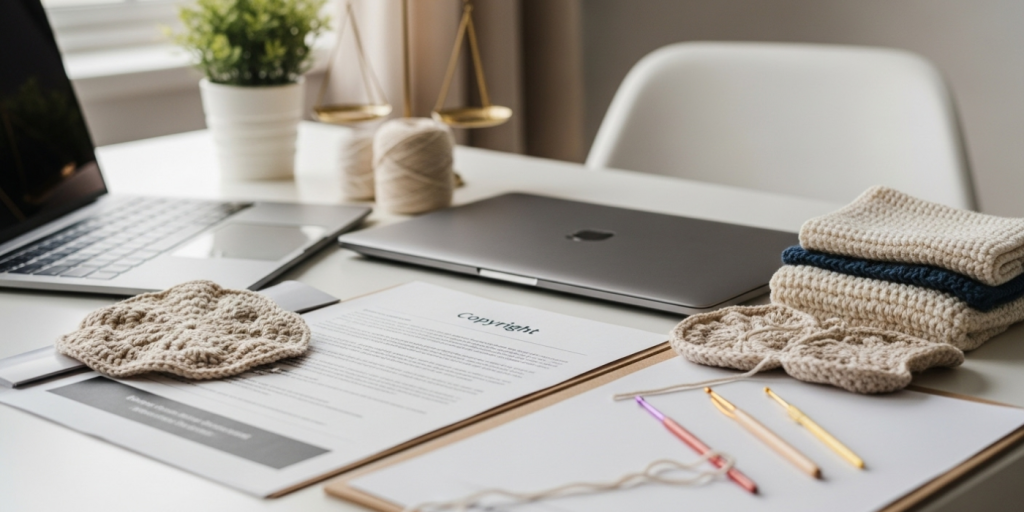
Understanding everything you need to know about crochet copyright and licensing is essential for every maker, designer, teacher, and small business owner in the handmade world. Unlike common misconceptions, copyright law does protect original crochet patterns—and misunderstanding these rights can lead to serious legal, financial, and reputational consequences. At the same time, knowing how to properly license your own work or legally use others’ designs empowers you to grow ethically, creatively, and sustainably.
In my 15+ years as a crochet designer, pattern publisher, and consultant for handmade brands, I’ve witnessed countless well-intentioned makers unknowingly infringe on copyrights—sharing full patterns online, reselling modified versions without permission, or claiming someone else’s stitch motif as their own. Conversely, I’ve also seen designers lose income because they failed to assert their rights clearly or structure licenses effectively.
This guide cuts through the confusion with clear, actionable, and legally grounded insights into everything you need to know about crochet copyright and licensing. Whether you’re selling finished items, publishing patterns, teaching workshops, or simply sharing your makes online, this knowledge protects you—and respects the creative labor of others.
What This Topic Means for Crochet & Knitting Businesses
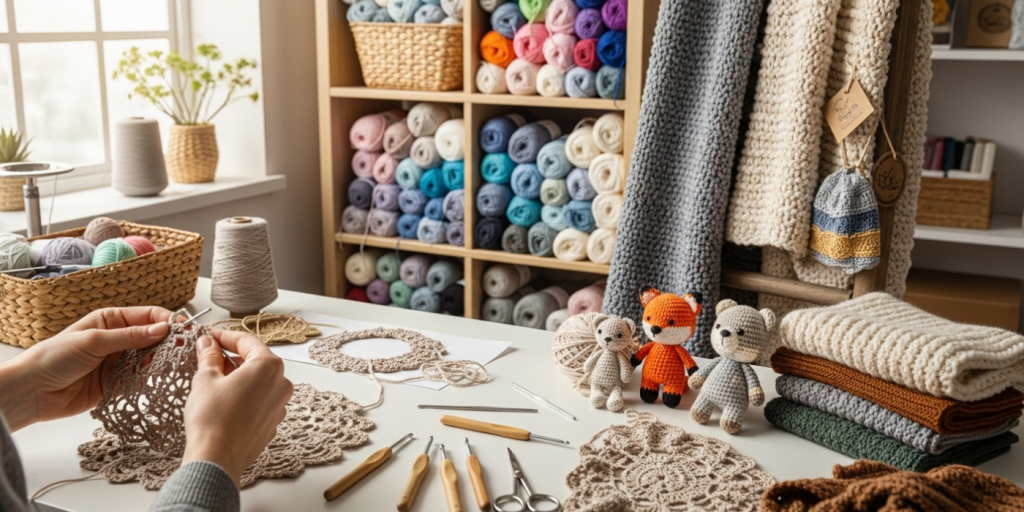
For handmade entrepreneurs, copyright and licensing aren’t abstract legal concepts—they’re operational necessities. In many crochet businesses, revenue depends on digital pattern sales, custom commissions, or branded tutorials. Without clear copyright boundaries, these assets become vulnerable to unauthorized copying, resale, or misattribution.
Experienced designers often recommend including a standardized copyright notice and licensing terms in every pattern PDF—specifying what buyers can and cannot do (e.g., “You may sell finished items, but not redistribute this pattern”). From working with multiple crochet brands, I’ve observed that businesses with transparent licensing policies experience fewer disputes, higher customer trust, and stronger brand integrity.
Moreover, understanding licensing allows you to collaborate safely. Want to feature another designer’s pattern in your kit? You’ll need a written license. Planning to teach a class based on a published design? Permission is required unless it’s your original work. Ignoring these steps risks cease-and-desist letters or platform bans (Etsy, Ravelry, and Instagram all enforce copyright claims).
Ultimately, treating copyright as a core business practice—not an afterthought—protects your livelihood and honors the ecosystem of creativity you’re part of.
Why This Strategy Works Especially Well in the Crochet Community
The crochet community thrives on sharing, inspiration, and collaboration—but it also deeply values originality and attribution. Unlike mass-produced goods, handmade items carry the maker’s time, skill, and vision. This cultural respect for creative labor makes the community uniquely receptive to ethical copyright practices.
Experienced designers often note that when makers understand why copyright matters—not just what the rules are—they become advocates rather than rule-breakers. For example, once a crocheter learns that a $6 pattern represents hours of drafting, testing, and tech editing, they’re far less likely to share it freely in a Facebook group.
Platforms like Ravelry have built-in tools to credit designers and link to original patterns, reinforcing a culture of attribution. Similarly, hashtags like #DesignersNeedCoffee and #SupportIndieDesigners remind users that behind every pattern is a real person earning a living.
When you apply everything you need to know about crochet copyright and licensing, you’re not just avoiding legal trouble—you’re contributing to a sustainable, respectful creative economy where innovation is rewarded, not exploited.
Materials, Tools, or Resources Needed
To navigate copyright and licensing responsibly, gather these essential resources:
- Copyright notice template: A clear, consistent statement for your patterns (e.g., “© [Year] [Your Name]. All rights reserved.”).
- Licensing clause library: Pre-written terms for personal use, small-business resale, teaching, etc.
- Digital pattern watermarking tool: Subtle background text (e.g., “Licensed to [Buyer Email]”) to deter redistribution.
- Terms of Use page: For your website or Etsy shop, outlining permitted uses of your patterns.
- U.S. Copyright Office registration portal (or your country’s equivalent): To formally register high-value patterns.
- Legal disclaimer generator: For blogs or social media (e.g., “I am not a lawyer; this is informational only”).
- Pattern distribution platform: Use trusted marketplaces like Ravelry, LoveCrafts, or your own Shopify store with built-in license enforcement.
- Record-keeping system: Track which patterns you’ve licensed from others and under what terms.
Many indie designers also consult with intellectual property attorneys specializing in creative industries for high-stakes projects (e.g., book deals, brand collaborations).
Yarn Types and Fiber Considerations
While yarn selection isn’t directly tied to copyright law, it intersects with licensing in key ways:
- Branded yarn requirements: Some designers specify a particular yarn brand in their pattern. You may substitute fibers, but you cannot claim the finished item is “made with [Brand X]” unless you actually used it.
- Yarn company collaborations: If a pattern is officially licensed by a yarn brand (e.g., “Bernat Blanket Crochet Along”), redistribution or modification may be restricted by both the designer’s and the brand’s terms.
- Photography rights: Using trademarked yarn labels in your product photos may require permission if you’re implying endorsement.
In short: while you own the physical item you make, you don’t own the pattern, the brand names, or the marketing imagery associated with them—unless explicitly licensed.
Skill Level Breakdown
Beginner
- Focus: Understand basic rules: don’t share full patterns, always credit designers.
- Avoid: Assuming “free = public domain” or “I bought it, so I can resell it.”
- Key takeaway: Finished items are yours; the pattern instructions are not.
Intermediate
- Learn: Difference between copyright (expression) and ideas (stitches, techniques).
- Begin: Reading pattern licenses carefully before selling or teaching.
- Key takeaway: You can sell what you make, but not the instructions to make it.
Advanced
- Create: Your own licensing terms for patterns.
- Register: High-value designs with your national copyright office.
- Negotiate: Custom licenses for collaborations, translations, or kits.
- Key takeaway: Copyright is a business asset—protect and leverage it strategically.
From mentoring new designers, I’ve found that most copyright violations stem from ignorance, not malice. Education at every level prevents harm.
Step-by-Step Guide: Everything You Need to Know About Crochet Copyright and Licensing
Step 1: Understand What Copyright Protects (and What It Doesn’t)
- Protected: Original written instructions, charts, photos, layout, and unique motif arrangements.
- Not protected: Basic stitches (single crochet, granny square), standard techniques, functional item shapes (a generic hat), or ideas (“a cactus amigurumi”).
💡 Key principle: Copyright covers how something is expressed—not the underlying idea.
Step 2: Always Assume a Pattern Is Copyrighted
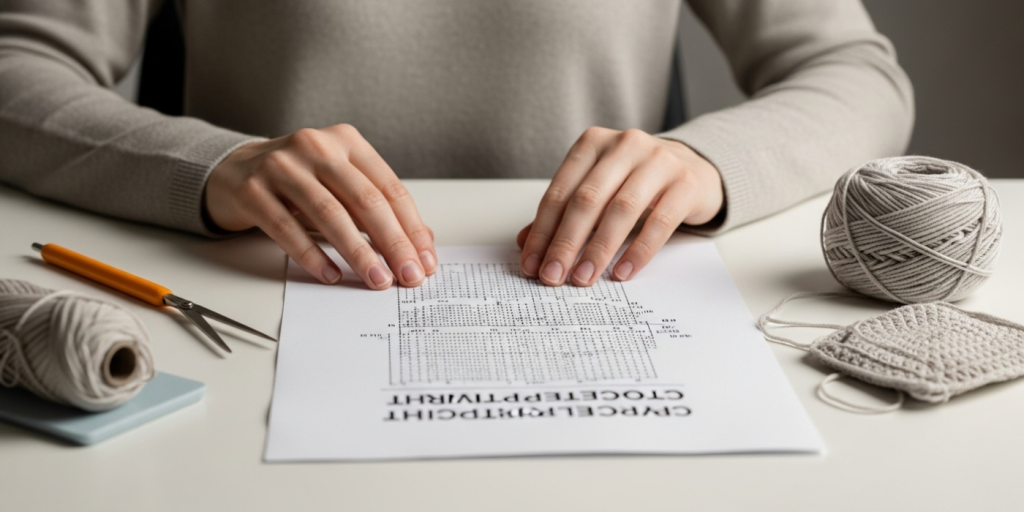
Unless explicitly labeled “public domain” or “CC0,” assume all patterns are protected—even free ones.
- Free ≠ free to redistribute.
- Old ≠ public domain (copyright lasts 70+ years after the creator’s death in most countries).
Step 3: Read the License Terms Before Using a Pattern
Most designers include a “Terms of Use” section. Common permissions:
- Personal use: Make for yourself or as gifts.
- Small-business resale: Sell finished items, often with credit.
- Teaching: Only allowed with explicit written permission.
- Modification: You may adapt for personal use, but cannot republish the altered version.
Step 4: Never Share Full Patterns
- Don’t email PDFs to friends.
- Don’t upload to file-sharing sites.
- Don’t post written instructions in forums (even “to help”).
Instead: share a link to the original source.
Step 5: Credit Designers Publicly
When posting your makes:
- Tag the designer on social media.
- Link to the pattern in your caption or blog.
- Use hashtags like #MadeWith[DesignerName].
This builds goodwill and supports their visibility.
Step 6: If Selling Finished Items, Verify Resale Rights
- Most indie designers allow it, but some restrict commercial use.
- Never imply the designer endorses your shop unless agreed.
- Avoid using the designer’s photos or branding in your listings.
Step 7: For Your Own Patterns, Assert Your Rights Clearly
Include in every pattern:
- © [Year] [Your Name]
- “All rights reserved.”
- Specific license terms (e.g., “You may sell finished items, but not this pattern.”)
- A request for credit when shared online.
Step 8: Register High-Value Works (Optional but Recommended)
In the U.S., registration with the Copyright Office (copyright.gov) enables statutory damages in lawsuits. Do this for:
- Bestselling patterns
- Signature designs
- Pattern collections or books
Step 9: Handle Infringement Professionally
If someone copies your work:
- Send a polite DM or email requesting removal.
- Use platform reporting tools (Etsy, Instagram, Ravelry).
- Escalate to a cease-and-desist letter only if necessary.
Never engage in public shaming—it damages community trust.
Common Mistakes and How to Avoid Them
Mistake 1: “I Modified It, So It’s Mine”
Why it happens: Belief that changes = originality.
Reality: Derivative works still require permission from the original copyright holder.
Fix: Modify for personal use only. Don’t publish or sell the altered pattern.
Mistake 2: Sharing “Free” Patterns Without Checking Terms
Why it happens: Assuming generosity = unlimited use.
Consequence: Designer loses traffic and income.
Fix: Always link to the source—never repost full content.
Mistake 3: Selling Items Without Verifying Resale Rights
Why it happens: Assuming “if I made it, I can sell it.”
Risk: Some designers prohibit commercial use.
Fix: Read the license. When in doubt, ask.
Mistake 4: Using Trademarked Characters (Disney, Pokémon, etc.)
Why it happens: Popularity drives demand.
Reality: These are trademarked, not just copyrighted—strictly enforced.
Fix: Avoid recognizable characters unless you have a license (which individuals rarely get).
Mistake 5: Confusing “Technique” with “Pattern”
Why it happens: Thinking “granny square” is owned by someone.
Clarification: Techniques are free to use; specific written instructions are not.
Fix: Write your own pattern if you’re publishing.
Advanced Tips and Professional Insights
- Use Creative Commons wisely: If offering free patterns, choose a CC license (e.g., CC BY-NC) that specifies attribution and non-commercial use.
- License tiers: Offer different licenses for hobbyists ($5) vs. small businesses ($15) to monetize fairly.
- International considerations: Copyright laws vary slightly by country, but the Berne Convention provides broad mutual protection.
- Pattern theft detection: Use Google Alerts for your pattern titles or unique phrases.
- Collaboration contracts: Always draft a simple agreement when co-designing or bundling patterns.
Experienced designers often recommend adding a “Credit Me” badge to your website—making it easy for makers to share properly.
Real-World or Hypothetical Examples
Example 1: The Unauthorized Kit
A seller on Etsy bundled a popular designer’s free pattern with yarn, calling it “My Exclusive Kit.”
- Issue: No permission to distribute the pattern.
- Outcome: Designer reported the listing; Etsy removed it and issued a strike.
- Lesson: Always license patterns for resale—even if free.
Example 2: Ethical Small Business
A crochet shop owner wanted to sell finished toys from a designer’s pattern.
- Action: Emailed the designer, who granted a small-business license for $20/year.
- Result: Shop included “Pattern by [Designer]” in every listing, driving traffic back to the creator.
- Lesson: Permission builds partnerships.
Customization and Adaptation Ideas
- Create your own stitch library: Document original motif combinations to establish your own copyrightable work.
- Develop signature construction methods: Unique assembly techniques can be part of your protected expression.
- Offer “inspired by” designs: Instead of copying, create something new in a similar style—then write your own pattern.
- Translate with permission: Many non-English designers welcome licensed translations; propose a revenue split.
Always ask: “Am I building on someone’s work—or creating my own path?”
Care, Maintenance, or Best Practices
- Archive your licenses: Keep records of permissions you’ve granted or received.
- Update old patterns: Add clear copyright notices to legacy PDFs.
- Educate your audience: Include a “How to Respect Copyright” note in newsletters or workshops.
- Respect takedowns: If asked to remove content, do so promptly—it preserves relationships.
- Give credit generously: Even for techniques you learned from others, acknowledge mentors.
Ethical practice isn’t just legal—it’s good business.
Monetization Opportunities
Understanding everything you need to know about crochet copyright and licensing opens several revenue streams:
- Licensing your patterns to yarn companies or magazines.
- Offering commercial-use upgrades for small businesses.
- Creating educational courses on ethical making and IP for crafters.
- Consulting for handmade brands on copyright compliance.
- Selling pattern bundles with clear, tiered licenses.
Transparency builds trust—which converts to loyal customers and repeat sales.
Frequently Asked Questions (FAQ)
Can I sell items made from someone else’s pattern?
Yes, in most cases—if the designer allows it. Always check the pattern’s terms. Many indie designers permit small-scale sales with credit.
Are crochet stitches copyrighted?
No. Basic stitches (sc, dc, shell stitch) are techniques, not protected expression. However, a unique arrangement of stitches in a written pattern is copyrighted.
Can I use Disney characters in my crochet?
No. Disney, Marvel, Pokémon, and similar characters are trademarked. Selling items with them—even handmade—violates intellectual property law and risks legal action.
Do I need to register my pattern to have copyright?
No. Copyright exists automatically upon creation. But registration (e.g., with the U.S. Copyright Office) strengthens your legal position if infringement occurs.
Can I translate a pattern and share it?
Only with the original designer’s written permission. Translation is a derivative work and requires a license.
What if I see someone stealing a pattern?
Politely notify the designer. Avoid public accusations. Use platform reporting tools (Etsy, Instagram) to flag the violation.
Conclusion
Mastering everything you need to know about crochet copyright and licensing is not about restriction—it’s about respect, sustainability, and professional integrity. In a world where creativity is both art and livelihood, understanding these principles ensures that makers can thrive without exploiting one another.
Whether you’re publishing your first pattern, selling handmade gifts, or simply sharing your latest project online, these guidelines protect you and honor the collective effort of the handmade community. Copyright isn’t the enemy of sharing—it’s the foundation of a fair, vibrant, and enduring craft culture.
So go ahead: create boldly, share generously, and always credit wisely. The future of crochet depends on makers like you choosing ethics as much as aesthetics.

Helena Nogueira é uma entusiasta do crochê e do artesanato, explorando novas técnicas e projetos em busca de criações únicas e cheias de personalidade. Apaixonada por criatividade e desenvolvimento pessoal, ela alia dedicação e curiosidade para transformar fios em arte, cultivando hábitos que impulsionam seu crescimento enquanto compartilha beleza e inspiração com quem valoriza o feito à mão.