Introduction
For many handmade entrepreneurs, the dream of turning a passion for crochet into a sustainable business begins not online—but face-to-face, at a bustling weekend craft fair. There’s something irreplaceable about watching a customer’s eyes light up as they touch a hand-stitched blanket, try on a beanie, or ask how long it took to make a delicate lace shawl. Selling crochet in person offers immediate feedback, builds genuine relationships, and creates memorable brand experiences that digital stores simply can’t replicate.
Yet, without preparation, even the most beautiful crochet items can get lost in a sea of vendors. A successful craft fair isn’t just about showing up with inventory—it’s about strategic planning, thoughtful presentation, and authentic engagement. In this comprehensive guide, you’ll learn exactly how to prepare for, execute, and profit from in-person sales events. Drawing from over a decade of experience running booths at regional fairs, holiday markets, and fiber festivals—and advising dozens of handmade brands—you’ll gain actionable insights that go far beyond “bring a table and smile.”
Whether you’re a first-time vendor or a seasoned seller looking to refine your approach, this guide will help you turn foot traffic into loyal customers and one-time sales into repeat business.
What This Topic Means for Crochet & Knitting Businesses
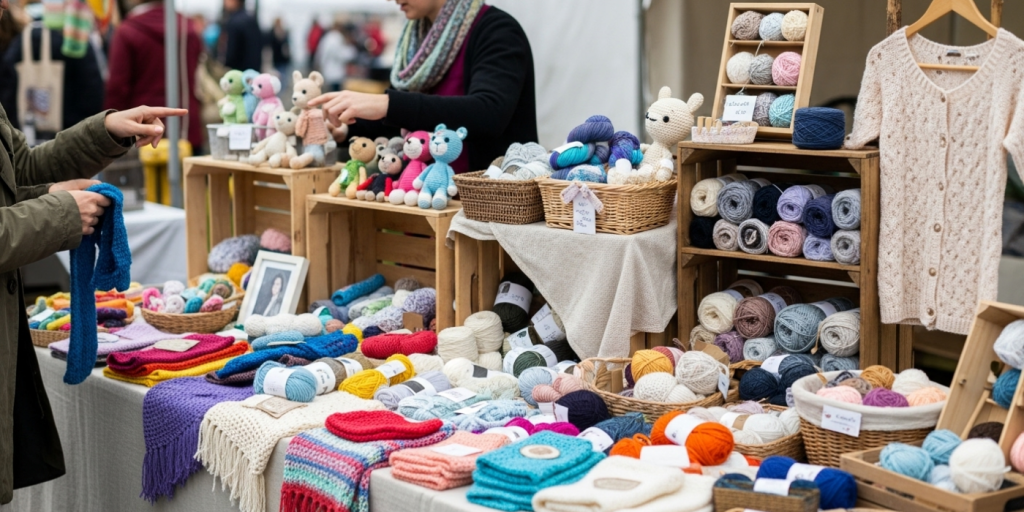
In an era dominated by Etsy shops and Instagram storefronts, selling crochet in person remains a powerful growth engine for handmade businesses. Why? Because tactile products like crocheted goods thrive on sensory interaction. Customers want to feel the softness of merino wool, drape a scarf over their shoulders, or test the stretch of a headband—experiences impossible to replicate online.
From working with multiple crochet brands, I’ve observed that businesses that combine online presence with strategic in-person appearances see 30–50% higher customer retention. Why? Because meeting the maker builds trust. A buyer who shakes your hand is more likely to follow you on social media, leave a glowing review, and return next season.
Moreover, craft fairs offer real-time market research. You’ll hear unfiltered feedback: “I love this, but do you have it in sage green?” or “This would sell better if it were $5 cheaper.” These insights are gold for refining your product line, pricing, and messaging.
In many crochet businesses, craft fairs aren’t just sales channels—they’re brand-building laboratories.
Why This Strategy Works Especially Well in the Crochet Community
Crochet is inherently personal. Each stitch carries time, intention, and skill. At a craft fair, you’re not just selling a product—you’re sharing a story. The handmade community values authenticity, and in-person events amplify that connection.
Experienced designers often recommend starting with local fairs before scaling to larger markets. Why? Because small events allow you to test pricing, packaging, and display ideas with lower risk. Plus, the crochet community is tight-knit—vendors often refer customers to each other, share tips, and even collaborate on future pop-ups.
Additionally, seasonal demand aligns perfectly with fair calendars. Holiday markets (October–December) drive gift sales, while spring and summer fairs attract buyers seeking lightweight accessories like market bags, sun hats, and baby items. By aligning your inventory with these rhythms, you maximize relevance and revenue.
Materials, Tools, or Resources Needed
Success starts long before event day. Gather these essentials:
Booth Setup
- Tent or canopy (10’x10′ standard; check event rules)
- Display tables (6–8 ft, skirted for professionalism)
- Tablecloths (neutral or branded)
- Shelving or risers (to create height variation)
- Clothing racks or mannequins (for wearable items)
- Signage: banner with business name, price list, care instructions
- Lighting: battery-powered LED strips for cloudy days or indoor venues
Sales & Operations
- Cash box with starting change ($1s, $5s, coins)
- Mobile POS system (Square, PayPal Zettle, or Shopify POS)
- Receipt book (digital or paper)
- Shopping bags (branded if possible)
- Business cards or QR code linking to your online shop
- Inventory checklist (track what sells fastest)
Personal Comfort
- Comfortable shoes (you’ll stand 6–8 hours)
- Water bottle and snacks
- Portable chair (for slow periods—check if allowed)
- Weather gear (sunscreen, rain poncho, layers)
Optional but impactful:
- Mirror (for customers to try on hats/scarves)
- Small basket of free samples (e.g., mini scrunchies)
- Guestbook for email sign-ups
Yarn Types and Fiber Considerations
While yarn choice doesn’t directly affect your booth setup, it influences what sells best in person.
- Soft, tactile fibers (merino, cotton, bamboo) invite touching—critical for impulse buys.
- Bright, saturated colors catch the eye from 10+ feet away.
- Durable blends (wool/acrylic, cotton/nylon) reassure buyers about longevity.
- Avoid overly fuzzy or delicate yarns (like mohair) for high-traffic displays—they pill quickly when handled.
Pro tip: Bring a swatch card showing your most-used yarns. It builds credibility and answers questions like, “Is this washable?”
Skill Level Breakdown
Beginner
Focus on:
- Simple, consistent inventory (e.g., 20 beanies in 4 colors)
- Clear pricing ($15, not “$12–$18”)
- Basic booth setup (table, sign, cash box)
Beginners should choose low-cost, local fairs to minimize risk.
Intermediate
Ready to:
- Offer bundled deals (“Buy 2, get 10% off”)
- Collect emails for follow-up
- Use branded packaging
This level benefits from tracking sales data to refine future inventory.
Advanced
Masters of:
- Multi-level displays (hanging, standing, flat)
- Live demos (e.g., quick crochet during slow hours)
- Strategic fair selection (juried shows, niche markets)
Advanced sellers often use fairs primarily for lead generation, not just immediate sales.
Step-by-Step Guide to Selling Crochet In Person at Craft Fairs
Step 1: Choose the Right Fair

Not all fairs are equal. Research:
- Audience: Is it family-friendly? High-income? Tourist-heavy?
- Vendor fees: Range from $25 (school fundraiser) to $500+ (premier holiday market)
- Foot traffic: Ask organizers for past attendance numbers
- Competition: Are there 3 other crochet vendors? Or none?
Apply early—popular fairs fill months in advance.
Step 2: Plan Your Inventory
Bring 3x more inventory than you think you’ll sell. Categorize:
- Bestsellers (60% of stock): proven items like beanies, dishcloths, baby blankets
- Statement pieces (20%): high-margin items like wedding shawls or art dolls
- Impulse buys (20%): under $15 items like keychains, coasters, or mini amigurumi
Price everything clearly. Use tags or a printed price list.
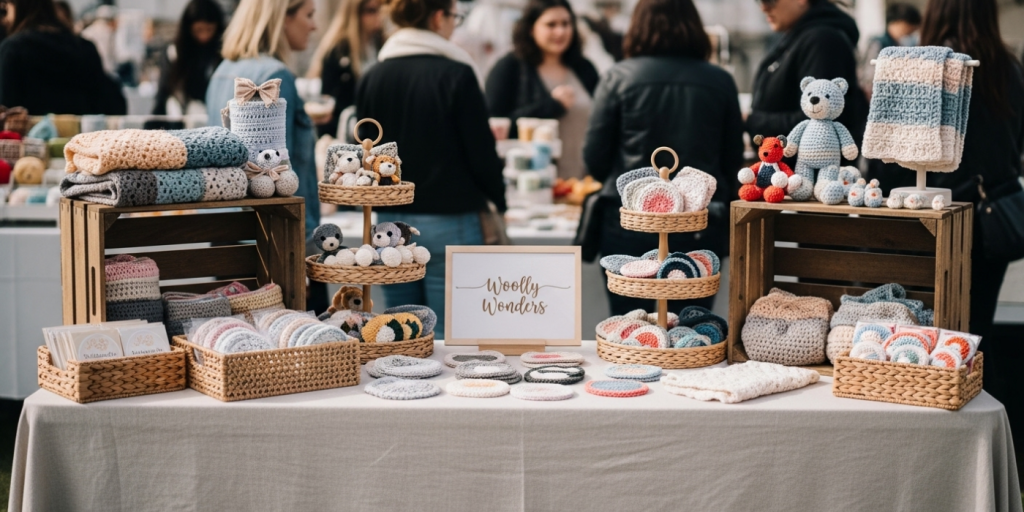
Step 3: Design Your Booth Layout
Follow the “triangle rule”: create three visual zones (eye level, table level, hanging) to guide attention.
- Back wall: Banner with your business name and logo
- Center: Mannequin wearing your top product
- Front edge: Low bins of affordable items to draw people in
- Side: Seating area (if allowed) for conversations
Keep aisles clear—crowded booths feel chaotic.
Step 4: Prepare for Transactions
- Test your card reader the night before.
- Have a backup phone charger.
- Pre-bag popular items to speed up checkout.
- Offer local pickup for online orders placed at the fair.
Step 5: Engage Authentically
Greet every passerby with a warm “Hi!” but don’t hover. Let them browse, then ask open-ended questions:
- “What brings you to the fair today?”
- “Do you crochet yourself?”
- “Is this for a gift or for you?”
Listen more than you pitch.
Step 6: Follow Up After the Fair
- Post thank-you stories on Instagram tagging the event.
- Email new subscribers with a “fair exclusive” discount.
- Analyze sales: Which item sold out? Which didn’t move? Adjust for next time.
Common Mistakes and How to Avoid Them
1. Underpricing to “Be Competitive”
Mistake: Selling beanies for $8 when materials cost $6.
Fix: Calculate true cost (yarn + time + booth fee ÷ expected sales). Price with confidence—quality justifies value.
2. Poor Booth Visibility
Mistake: All items flat on a table, no signage.
Fix: Use height, color blocks, and lighting. Your booth should be recognizable from 20 feet away.
3. Ignoring Weather
Mistake: No tent weights → canopy blows away in wind.
Fix: Bring 20–40 lbs of weight per leg (water jugs work). Pack tarps for rain.
4. Not Having Change
Mistake: Customer hands you a $50 bill for a $12 item—and you’re out of $1s.
Fix: Start with $100 in mixed bills: 20x $1, 10x $5, 4x $10, 2x $20.
5. Talking Too Much
Mistake: Over-explaining your process before the customer shows interest.
Fix: Let the product speak first. Answer questions, don’t lecture.
Advanced Tips and Professional Insights
After running over 50 craft fairs and mentoring dozens of makers, here’s what separates good from exceptional:
1. Create a “Booth Signature”
Develop a unique element people remember:
- A custom scent (e.g., lavender linen spray on blankets)
- A live demo station (crochet a flower in 5 minutes)
- A photo backdrop with your logo
This fuels word-of-mouth and social shares.
2. Bundle for Higher Average Order Value
Instead of selling one beanie for $22, offer:
- Beanie + matching cowl = $38 (saves $6)
- Baby set (hat + booties + blanket) = $65
Customers feel they’re getting a deal while you increase revenue.
3. Track ROI Rigorously
Calculate:
Profit = (Total sales) – (Booth fee + travel + materials + time cost)
If a $100 fair yields $120 in sales but used 10 hours of your time, was it worth it? Only data tells the truth.
4. Build Relationships with Organizers
Thank them post-event. Ask for feedback. Vendors who are professional and easy to work with get first pick at prime spots next year.
5. Use Fairs for Content Creation
Film short reels: “A day at the fair,” “Customer reactions,” “How I pack my booth.” Authentic content performs exceptionally well online.
Real-World or Hypothetical Examples
Consider “Stitch & Co.,” a hypothetical crochet brand run by Maria, a former teacher. She started at a $30 church bazaar, selling only dishcloths and coffee cozies. After tracking sales, she noticed parents loved quick baby gifts—so she added newborn sets. By her third fair, she introduced a “Make-Your-Own-Color” station where customers picked yarn shades for custom beanies. Sales tripled.
Or take “Loop & Thread Collective,” a group of four makers who share a 10’x20′ booth at major festivals. They split costs, cross-promote, and cover breaks for each other. Their combined aesthetic—boho-modern crochet—draws crowds, and they’ve been invited back to the same holiday market for five years running.
In many crochet businesses, consistent, strategic fair participation builds community presence that online ads can’t buy.
Customization and Adaptation Ideas
Tailor your approach to your niche:
- Luxury Market: Use velvet trays, offer gift wrapping, accept only card payments.
- Farmers’ Market: Focus on practical items (market bags, produce sacks), use rustic wood displays.
- Fiber Festival: Bring works-in-progress, yarn samples, and pattern printouts.
- Holiday Bazaar: Add festive touches (mini trees, twinkle lights), offer gift boxes.
- Pop-Up with Local Cafe: Keep inventory minimal, focus on conversation and Instagrammable moments.
Remember: your booth should reflect your brand’s personality—whether minimalist, whimsical, or earthy.
Care, Maintenance, or Best Practices
Protect your investment:
- Clean items between fairs: Steam or spot-clean to remove dust and fingerprints.
- Rotate displays: Prevent sun fading by changing which items face outward.
- Store properly: Use acid-free tissue and breathable bins—not plastic bags.
- Inspect after each event: Repair loose stitches or replace worn tags immediately.
For sellers: Always carry a small repair kit (yarn needle, spare yarn, scissors) for on-the-spot fixes.
Monetization Opportunities
Craft fairs unlock multiple income streams beyond direct sales:
- Pattern Sales: Offer printed patterns of your bestsellers for $3–$5.
- Workshop Sign-Ups: Promote upcoming local classes or online courses.
- Custom Order Deposits: Take 50% down for made-to-order pieces.
- Email List Building: Offer a free “Care Guide for Handmade Items” PDF in exchange for sign-ups.
- Wholesale Inquiries: Display a “Interested in Carrying Our Line?” card for boutique owners.
Key: Position the fair as a relationship starter—not just a transaction point.
Frequently Asked Questions (FAQ)
1. How much inventory should I bring to my first craft fair?
Bring enough to fill your table 2–3 times over. For a 10’x10′ booth, that’s typically 40–60 items across price points. Better to have too much than sell out by noon.
2. What’s a good profit margin for handmade crochet?
Aim for 50–70% gross margin. Example: If materials cost $8, sell for $20–$25. This covers booth fees, time, and unexpected costs.
3. Do I need a business license to sell at craft fairs?
It depends on your location and event. Many cities require a temporary vendor permit. Check with your local city hall or fair organizer.
4. How do I handle haggling politely?
Smile and say, “I price fairly to honor the time and materials, but I can include a free care card!” Most will respect your boundary.
5. Should I offer discounts at fairs?
Only strategic ones: “Buy 2, save 10%” or “Spend $50, get a free coaster.” Avoid site-wide discounts—they devalue your work.
6. What if I don’t sell much at my first fair?
Don’t quit. Analyze: Was the audience wrong? Pricing off? Booth hard to see? Most successful vendors need 2–3 events to find their rhythm.
Conclusion
Selling crochet in person at craft fairs is more than a sales tactic—it’s a chance to connect, learn, and grow your handmade business in ways algorithms never can. Yes, it requires planning, stamina, and resilience. But the rewards—loyal customers, honest feedback, and the joy of seeing someone fall in love with your creation—are unmatched.
Start small. Choose one local fair. Focus on clarity, warmth, and quality. Track what works, refine what doesn’t, and return with confidence. With each event, you’ll build not just revenue, but a community around your craft.
So pack your best pieces, practice your pitch, and step into that booth with pride. Your hands made something beautiful—and the world deserves to see it, touch it, and take it home.
Helena Nogueira é uma entusiasta do crochê e do artesanato, explorando novas técnicas e projetos em busca de criações únicas e cheias de personalidade. Apaixonada por criatividade e desenvolvimento pessoal, ela alia dedicação e curiosidade para transformar fios em arte, cultivando hábitos que impulsionam seu crescimento enquanto compartilha beleza e inspiração com quem valoriza o feito à mão.