Introduction
Choosing the right yarn isn’t just about color or softness—it’s a foundational decision that shapes the success, durability, and emotional impact of every handmade project. Best practices for selecting yarn for different projects require a nuanced understanding of fiber properties, end-use requirements, stitch behavior, and even environmental considerations. A yarn that sings in a baby blanket may sag in a market tote; one that drapes beautifully in a shawl might lack the structure needed for amigurumi.
In my 20+ years as a crochet designer, pattern developer, and consultant for handmade brands, I’ve seen countless projects thrive—or falter—based solely on yarn choice. Beginners often assume “any yarn will do,” only to end up with a stiff scarf, a stretched-out sweater, or a toy that pills after one wash. Meanwhile, seasoned makers treat yarn selection as a strategic design act—one that aligns material with purpose, audience, and longevity.
This comprehensive guide unpacks the best practices for selecting yarn for different projects, offering actionable frameworks, real-world examples, and professional insights that empower you to make confident, intentional choices every time. Whether you’re crafting a gift, launching a product line, or simply exploring your creative voice, mastering this skill transforms your work from generic to exceptional.
What This Topic Means for Crochet & Knitting Businesses
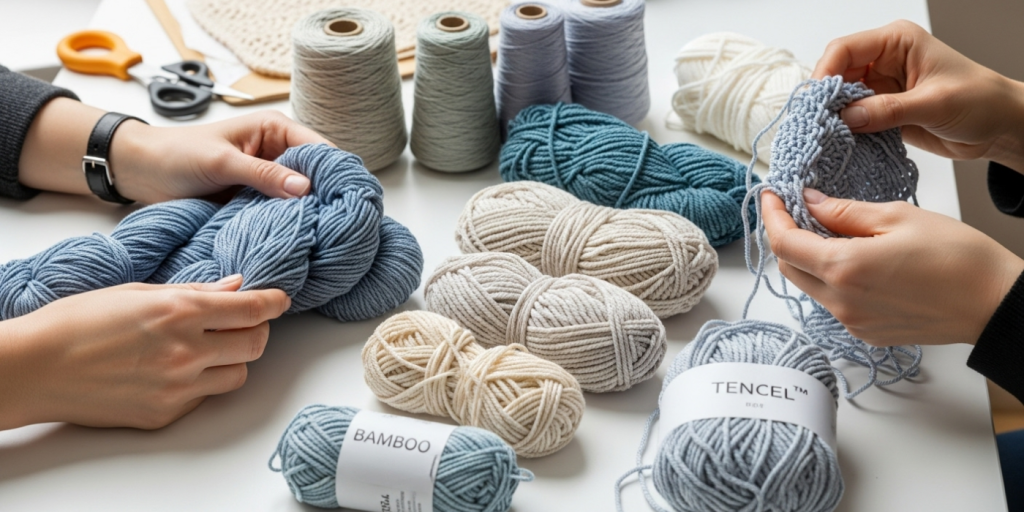
For handmade entrepreneurs, yarn selection directly impacts customer satisfaction, brand reputation, and operational efficiency. In many crochet businesses, the wrong yarn choice leads to returns, negative reviews, or wasted inventory. Conversely, thoughtful material curation builds trust and justifies premium pricing.
Experienced designers often recommend developing a “project-based yarn matrix”—a reference chart that maps common project types (e.g., baby items, home decor, wearables) to ideal fiber profiles, weights, and care requirements. From working with multiple crochet brands, I’ve observed that top-performing shops don’t just sell finished goods—they educate customers on why a specific yarn was chosen, turning a simple transaction into a storytelling opportunity.
Digital pattern designers who include detailed yarn substitution guidelines—complete with swatch photos, yardage calculators, and washing test results—see higher conversion rates and fewer support inquiries. When customers understand how to apply best practices for selecting yarn for different projects, they’re more likely to succeed, share their makes, and return for future patterns.
Moreover, sustainable and ethical yarn sourcing has become a key differentiator. Brands that transparently communicate their fiber origins (e.g., GOTS-certified cotton, traceable merino wool) attract conscious consumers willing to pay more for integrity.
Why This Strategy Works Especially Well in the Crochet Community
The crochet community thrives on texture, experimentation, and tactile intelligence. Unlike knitting, which often emphasizes uniformity, crochet celebrates dimension—popcorn stitches, bobbles, cables, and lace all react dramatically to yarn choice. This makes material selection not just practical, but creatively liberating.
Crocheters are naturally curious about how fibers behave under hook tension. The same stitch pattern can look architectural in linen, cloud-like in mohair, or crisp in mercerized cotton. Online platforms like Instagram, Ravelry, and YouTube amplify this curiosity, with makers sharing swatch comparisons, “yarn fails,” and successful substitutions.
Because crochet uses more yarn per square inch than knitting, the consequences of poor yarn selection are magnified. A slippery bamboo blend might unravel at the edges; a loosely spun wool could felt in the wash. This reality has cultivated a culture of mindful materialism: crocheters ask, “What does this yarn want to become?” rather than forcing it into an unsuitable role.
When you apply best practices for selecting yarn for different projects, you honor both the craft and the user—ensuring every piece is not just beautiful, but functional, durable, and meaningful.
Materials, Tools, or Resources Needed
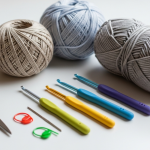
To implement effective yarn selection across project types, assemble these essential tools:
- Physical swatch library: Keep 4″x4″ blocked samples of yarns you’ve used, labeled with fiber, weight, hook size, and performance notes.
- Digital tracking sheet: Record brand, lot number, price per yard, care instructions, and project suitability.
- Yarn weight standards guide: Reference the Craft Yarn Council’s official categories (Lace to Jumbo).
- Fiber property cheat sheet: Quick-reference chart comparing elasticity, drape, warmth, and washability.
- Measuring tape and ruler: For accurate gauge and drape assessment.
- Blocking mats and pins: Essential to see true yarn behavior post-finishing.
- Washing/drying test kit: Small mesh bags to simulate laundering on swatches.
- Lightbox or consistent lighting: Evaluate true color and texture without glare.
Many professionals also maintain relationships with local yarn shop owners or indie dyers to access sample skeins before committing to bulk purchases—critical for small businesses managing cash flow.
Yarn Types and Fiber Considerations
Understanding fiber behavior is central to best practices for selecting yarn for different projects. Here’s how common fibers perform across use cases:
Wool (Including Merino, Shetland, Alpaca)
- Pros: Elastic, warm, resilient, excellent stitch definition.
- Cons: Can felt if agitated, may irritate sensitive skin.
- Best for: Sweaters, hats, mittens, textured blankets.
- Note: Superwash wool is machine-washable but less elastic.
Cotton (Including Mercerized, Organic, Recycled)
- Pros: Breathable, absorbent, crisp stitch definition, hypoallergenic.
- Cons: No memory, stretches when wet, heavy.
- Best for: Dishcloths, summer tops, baby items, amigurumi.
- Tip: Mercerized cotton has added sheen and strength.
Acrylic
- Pros: Affordable, durable, wide color range, easy care.
- Cons: Poor breathability, pills over time, static-prone.
- Best for: Charity projects, beginner practice, budget-friendly gifts.
- Caution: Low-quality acrylic feels plasticky; invest in premium blends.
Bamboo/Rayon/Tencel™
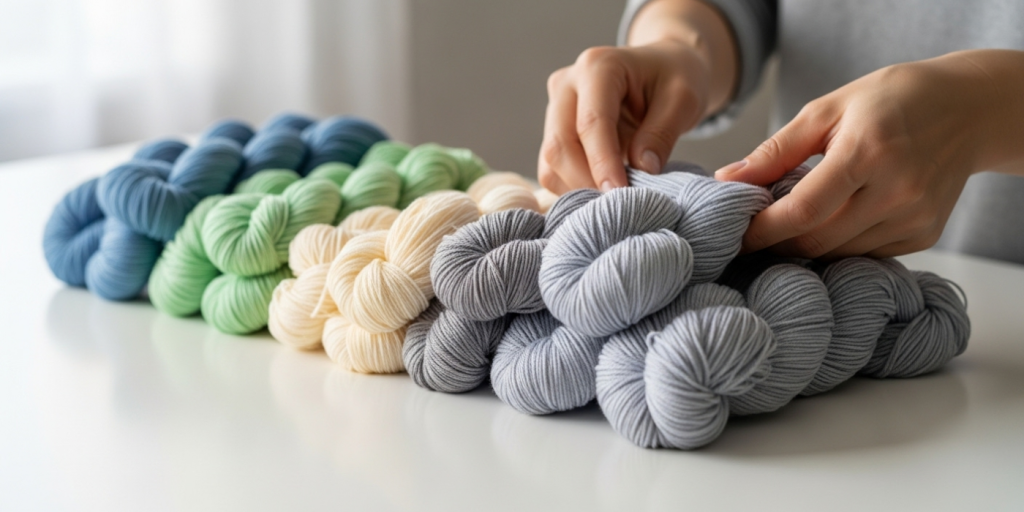
- Pros: Silky drape, lustrous finish, eco-friendly (if processed responsibly).
- Cons: Very slippery, stretches significantly, weak when wet.
- Best for: Lace shawls, drapey cardigans, lightweight scarves.
- Warning: Avoid for structural items like bags or toys.
Linen/Hemp
- Pros: Strong, gets softer with washing, cool in heat, antimicrobial.
- Cons: Stiff initially, no elasticity, wrinkles easily.
- Best for: Market totes, structured tops, home decor.
- Tip: Blends with cotton improve comfort while retaining strength.
Blends
- Wool + Nylon: Adds durability (ideal for socks or high-wear items).
- Cotton + Acrylic: Balances breathability and affordability.
- Alpaca + Silk: Luxurious drape with added strength.
Always match fiber to function: Will it be washed weekly? Worn next to skin? Displayed as art? Let the project’s life dictate the material.
Skill Level Breakdown
Beginner
- Focus: Smooth, medium-weight (worsted/Aran) yarns in solid colors.
- Avoid: Fuzzy, slippery, novelty, or very thin/thick yarns.
- Recommended fibers: Premium acrylic, smooth cotton, superwash wool.
- Selection priority: Clarity, ease of handling, and forgiving tension.
Intermediate
- Experiment: Different weights, textures, and fiber blends.
- Learn: To read yarn labels for ply, dye lot, and care symbols.
- Begin: Substituting yarns within the same weight category.
- Selection priority: Matching pattern intent while exploring personal style.
Advanced
- Confidently: Substitute across weights using gauge math.
- Understand: How twist, ply, and finish affect stitch behavior.
- Select: Based on drape, memory, sustainability, and audience needs.
- Selection priority: Strategic alignment with design vision and lifecycle.
From teaching workshops, I’ve found that intermediate crocheters often overlook how yarn texture affects gauge consistency. A lofty single-ply requires looser tension; a tightly plied yarn demands precision. Awareness of this alone prevents half the common mistakes.
Step-by-Step Guide: Best Practices for Selecting Yarn for Different Projects
Step 1: Define the Project’s Purpose and Lifecycle
Ask:
- Who is it for? (Baby, adult, pet?)
- How will it be used? (Daily wear, occasional display, frequent washing?)
- What environment? (Hot climate, winter outdoors, indoor decor?)
Example: A baby lovey needs to be soft, non-toxic, and machine-washable → choose organic cotton or premium acrylic.
Step 2: Identify Structural Requirements
Consider:
- Drape: Flowing (shawl) vs. stiff (basket).
- Memory: Must bounce back (hat) vs. hold shape (amigurumi).
- Durability: High abrasion (slippers) vs. delicate (lace edging).
Match these to fiber properties.
Step 3: Review Pattern Recommendations (If Applicable)
Note:
- Suggested weight and fiber.
- Gauge (sts per inch).
- Yardage total.
Use this as a starting point—not a rule.
Step 4: Swatch with Intention
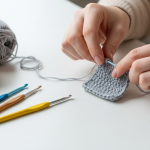
Create a 6″x6″ swatch in the main stitch pattern.
- Block it as you would the final piece.
- Assess:
- Gauge accuracy
- Drape and hand
- Stitch definition
- Splitting or snagging
Step 5: Evaluate Care and Maintenance Needs
Check:
- Machine-washable? (Critical for kids’ items)
- Dry-clean only? (Limits usability)
- Colorfast? (Test by soaking a swatch)
Never assume—verify.
Step 6: Calculate Yardage Realistically
Formula:
(Pattern’s total yards ÷ original yarn’s yards per skein) × your yarn’s yards per skein = total skeins needed
Add buffer:
- 10% for simple projects
- 15–20% for lace, colorwork, or textured stitches
Step 7: Confirm Color and Dye Lot Consistency
- Buy all skeins from the same dye lot.
- For variegated yarns, wind a small ball to check pooling.
- View in natural light to assess undertones.
Step 8: Document Your Decision
Record:
- Brand, fiber, colorway, lot #
- Hook size and gauge
- Swatch photo and notes
- Project outcome (post-completion)
This builds a living knowledge base for future projects.
Common Mistakes and How to Avoid Them
Mistake 1: Choosing Yarn Based Only on Aesthetics
Why it happens: Emotional response to color or softness.
Consequence: Beautiful yarn that pills, stretches, or lacks structure.
Fix: Prioritize function first, then aesthetics.
Mistake 2: Ignoring Ply and Twist Structure
Why it happens: Assuming all “worsted” yarns behave alike.
Consequence: Single-ply yarns stretch; high-twist yarns resist shaping.
Fix: Examine yarn construction—feel for bounce, smoothness, and cohesion.
Mistake 3: Skipping the Swatch (or Swatching Incorrectly)
Why it happens: Impatience or swatching in single crochet instead of pattern stitch.
Consequence: Ill-fitting garments, distorted motifs.
Fix: Swatch in the actual stitch pattern, block it, and measure over 4+ inches.
Mistake 4: Underestimating Yardage for Textured Stitches
Why it happens: Trusting pattern estimates without accounting for personal tension.
Consequence: Running out mid-project.
Fix: Weigh your swatch, calculate yards per gram, then scale up.
Mistake 5: Using Slippery Yarns for Amigurumi or Toys
Why it happens: Wanting silky finish.
Consequence: Stitches loosen over time; stuffing leaks.
Fix: Choose tightly spun, matte-finish cotton or acrylic for security.
Advanced Tips and Professional Insights
- Layer yarns for custom effects: Hold lace-weight silk with fingering wool for luminous depth.
- Seasonal sourcing: Stock cotton/linen in spring, wool/alpaca in fall—many dyers align releases with seasons.
- Hook-yarn synergy: Use wooden hooks for slippery fibers (bamboo), metal for sticky ones (wool).
- Sustainability metrics: Prioritize GOTS, OEKO-TEX®, or Responsible Wool Standard certifications.
- Audience empathy: For elderly users, avoid tiny buttons and choose anti-slip yarns for slippers.
Experienced designers often keep a “failure journal”—notes on yarns that bled, stretched, or split unexpectedly. This prevents repeat errors and informs future sourcing decisions.
Real-World or Hypothetical Examples
Example 1: Launching a Baby Collection
A handmade brand wanted safe, washable, and soft items.
- Rejected superwash wool (potential allergen) and cheap acrylic (pilling).
- Chose GOTS-certified organic cotton in DK weight.
- Swatched three hook sizes to balance softness and stitch security.
- Result: Hypoallergenic, machine-washable loveys and booties—featured in a major parenting blog.
Example 2: Creating a Market Tote
Client needed a sturdy, eco-friendly bag for farmers’ markets.
- Tested linen, cotton, and recycled polyester.
- Selected a 70% organic cotton / 30% recycled PET blend for strength + sustainability.
- Used a smaller hook than recommended to create a dense, non-stretch fabric.
- Added reinforced handles with nylon cord core.
- Final product held 15 lbs without sagging.
Customization and Adaptation Ideas
- Climate-responsive: Use alpaca for cold climates, bamboo for hot.
- Sensory-inclusive: For neurodivergent users, select tagless, ultra-soft, seamless yarns.
- Cultural resonance: Source locally produced fibers (e.g., Peruvian alpaca, Indian khadi) to honor heritage.
- Texture zoning: Combine smooth yarn for body and bouclé for trim in garments.
- Color psychology: Use calming blues/greens for baby items, vibrant reds for statement accessories.
Always ask: “Who will use this, and how will they experience it over time?”
Care, Maintenance, or Best Practices
- Label finished items: Include fiber content and care instructions—essential for gifts or sales.
- Pre-wash hand-dyed yarns: Some bleed; washing beforehand prevents color transfer.
- Store yarn properly: In breathable cotton bags, away from sunlight and pests.
- Respect intellectual property: You can substitute yarn freely, but don’t claim the modified project as an original design without significant changes.
- Share ethically: When posting online, credit yarn brands and designers—community thrives on reciprocity.
Monetization Opportunities
Mastering best practices for selecting yarn for different projects opens several revenue streams:
- Curated project kits: Pair patterns with perfectly matched yarns, including swatch cards and care guides.
- Yarn consultation services: Help customers choose materials for their specific needs.
- Educational content: Create video courses on fiber properties, swatching, or sustainable sourcing.
- Affiliate partnerships: Recommend trusted yarns with honest, tested reviews.
- Wholesale collaborations: Co-develop exclusive bases with indie dyers for your pattern lines.
Educational transparency builds trust—which converts to loyal customers and repeat sales.
Frequently Asked Questions (FAQ)
How do I choose yarn for a baby blanket?
Select soft, hypoallergenic, machine-washable fibers like organic cotton, premium acrylic, or superwash merino. Avoid fuzzy or novelty yarns that shed.
What yarn is best for dishcloths?
100% cotton—especially mercerized—for absorbency, durability, and stitch clarity. It softens with each wash.
Can I use the same yarn for a sweater and a bag?
Rarely. Sweaters need drape and elasticity; bags need structure and minimal stretch. Choose accordingly.
Why does my amigurumi lose its shape?
Likely due to low-twist or slippery yarn. Use tightly spun cotton or acrylic and stuff firmly.
How much extra yarn should I buy for a complex project?
Add 10% for simple items, 15–20% for lace, colorwork, or textured stitches to account for tension variance.
Is expensive yarn always better?
Not necessarily. “Better” depends on purpose. A $2 acrylic may outperform a $30 silk for a dishcloth. Match yarn to function, not price.
Conclusion
Applying best practices for selecting yarn for different projects is where craft meets intentionality. It’s the quiet expertise that turns a handmade item from “nice” into “indispensable.” Whether you’re making a gift that will be cherished for years, building a brand known for quality, or simply deepening your own creative practice, the yarn you choose speaks before a single stitch is made.
Start today: look at your next project not just as a pattern to follow, but as a life to design. Who will use it? How will it be cared for? What story should the material tell? Answer these, and your yarn choice will follow with confidence.
Your hook is ready. Now choose your thread with purpose.

Helena Nogueira é uma entusiasta do crochê e do artesanato, explorando novas técnicas e projetos em busca de criações únicas e cheias de personalidade. Apaixonada por criatividade e desenvolvimento pessoal, ela alia dedicação e curiosidade para transformar fios em arte, cultivando hábitos que impulsionam seu crescimento enquanto compartilha beleza e inspiração com quem valoriza o feito à mão.