Introduction
For experienced crocheters, the journey beyond basic stitches opens a world of texture, structure, and artistry. The phrase advanced crochet techniques isn’t just about complexity—it’s about precision, intentionality, and mastery over yarn, hook, and pattern. Whether you’re designing your own garments, creating bespoke home décor, or building a handmade brand, these refined skills are what separate hobbyists from professionals. In this comprehensive guide, we’ll explore the most impactful advanced crochet techniques that seasoned makers use to push creative boundaries, solve technical challenges, and deliver premium-quality work. From intricate lace motifs to seamless garment construction, you’ll gain actionable insights rooted in real-world practice—not theory alone. If you’ve already mastered double crochet, color changes, and reading standard patterns, you’re ready to dive deep into the next level of craftsmanship.
What This Topic Means for Crochet & Knitting Businesses
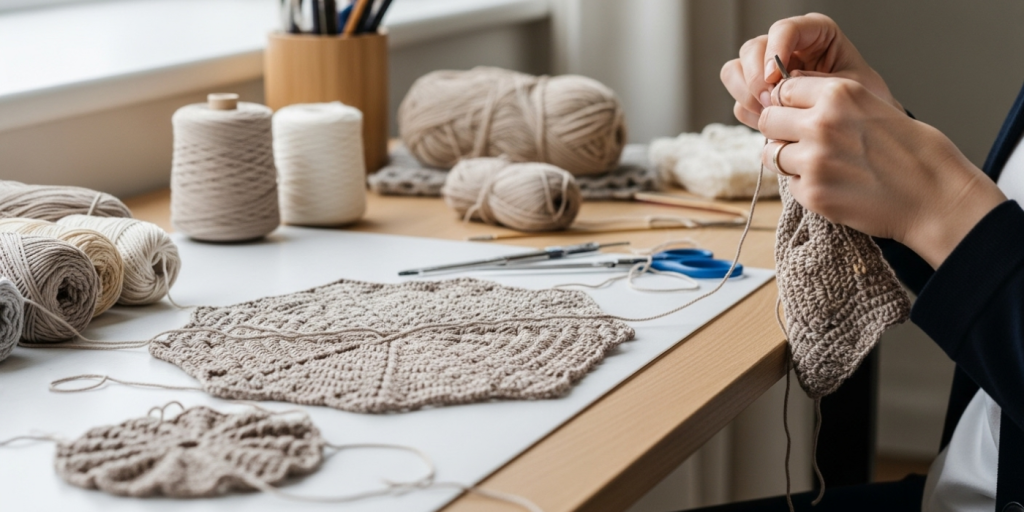
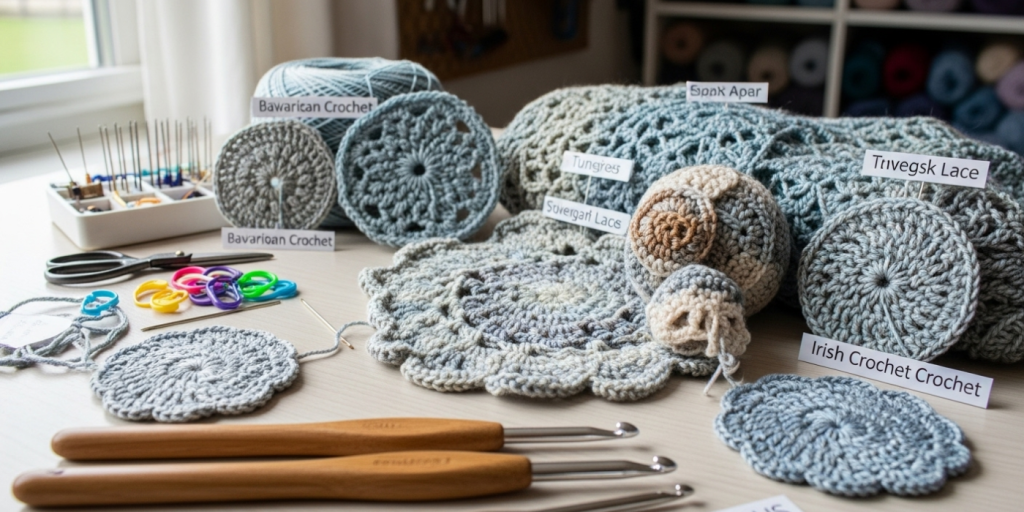
In the handmade economy, differentiation is everything. While beginners flood marketplaces with simple beanies and dishcloths, businesses that leverage advanced crochet techniques stand out through quality, originality, and perceived value. From working with multiple crochet brands over the years, I’ve observed a clear trend: customers pay premiums for items that showcase technical skill—whether it’s a perfectly fitted yoke sweater, a sculptural amigurumi with seamless joins, or a delicate doily using Irish crochet methods.
Experienced designers often recommend embedding advanced techniques into product lines not just for aesthetics, but for durability and wearability. For example, using short rows in shawl design prevents rolling edges—a subtle detail that reduces returns and increases customer satisfaction. Similarly, incorporating invisible decreases in stuffed toys creates smoother contours that photograph better online, directly boosting conversion rates.
Moreover, offering workshops or digital patterns based on these techniques can become a high-margin revenue stream. A well-documented tutorial on tapestry crochet or overlay mosaic can sell repeatedly with minimal overhead, establishing your brand as an authority while generating passive income.
Why This Strategy Works Especially Well in the Crochet Community
The crochet community thrives on shared knowledge, visual inspiration, and iterative learning. Unlike mass-produced goods, handmade crochet carries the maker’s fingerprint—literally and figuratively. When you master advanced techniques, you’re not just making something beautiful; you’re participating in a legacy of textile innovation that spans continents and centuries.
What makes this especially powerful is how social media amplifies technical excellence. A slow-motion video of Tunisian entrelac forming geometric blocks, or a time-lapse of broomstick lace blooming into floral motifs, garners engagement because viewers recognize the skill involved. In many crochet businesses, content showcasing advanced methods consistently outperforms generic “finished project” posts by 3–5x in reach and saves.
Additionally, the barrier to entry for learning advanced techniques is lower than ever—thanks to online tutorials, forums, and stitch dictionaries—but the barrier to executing them well remains high. That gap is where experienced makers build reputation, trust, and loyal followings. People don’t just buy your product; they buy your expertise.
Materials, Tools, or Resources Needed
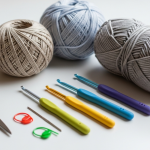
Before diving into complex stitches, ensure your toolkit supports precision and consistency:
- Hooks: Invest in ergonomic hooks with smooth shafts (e.g., Furls, Clover Amour, or Tulip Etimo). Sizes US B (2.25mm) to K (6.5mm) cover most advanced projects.
- Stitch Markers: Use split-ring markers for garment shaping and locking markers for lace repeats.
- Tapestry Needles: Bent-tip needles make weaving in ends on textured fabrics easier.
- Blocking Mats & Pins: Essential for lace, garments, and colorwork to achieve professional finishes.
- Row Counters: Digital or manual—critical for tracking repeats in complex patterns.
- Good Lighting & Magnification: Reduce eye strain during fine-detail work like micro-crochet or thread lace.
- Pattern Resources: Reliable sources include Crochet Guild of America, Ravelry designer pages, and books by Dora Ohrenstein, Robyn Chachula, or Lily Chin.
Pro tip: Keep a dedicated “technique swatch journal.” Document each new stitch with yarn specs, hook size, tension notes, and photos. This becomes an invaluable reference for future designs or client commissions.
Yarn Types and Fiber Considerations
Not all yarns behave the same under advanced manipulation. Choosing the right fiber can mean the difference between a crisp cable and a muddy blob.
- Cotton & Linen: Ideal for lace, filet, and structured pieces. They hold shape well but have little elasticity—great for table runners, but less forgiving in fitted garments.
- Wool & Wool Blends: The gold standard for cables, brioche, and textured stitches. Their memory and bounce help stitches “pop.” Merino offers softness; Shetland wool provides rustic definition.
- Silk & Bamboo: Luxurious drape for overlay crochet or fine thread work, but slippery—use smaller hooks and tighter tension.
- Acrylic: Budget-friendly and colorfast, but prone to splitting in intricate colorwork. Opt for premium acrylics like Scheepjes Softfun or Lion Brand Mandala for better stitch definition.
- Thread (Size 10–100): Required for true Irish crochet or doilies. Use steel hooks (0.6–1.75mm) and starch blocking for rigidity.
From working with multiple crochet brands, I’ve learned that swatching isn’t optional—it’s strategic. Always test your chosen technique in the actual yarn before committing to a full project. A cable that looks sharp in wool may vanish in a fuzzy mohair blend.
Skill Level Breakdown
Understanding where you stand helps target growth effectively:
- Beginner: Comfortable with chain, single/double crochet, basic increases/decreases. Can follow simple patterns.
- Intermediate: Confident with color changes, reading charts, shaping (armholes, necklines), and common stitches (shell, popcorn, puff).
- Advanced: Ready for this guide if you can:
- Work seamlessly in the round without jog lines
- Interpret complex written and charted instructions
- Adjust gauge intentionally for design outcomes
- Troubleshoot tension inconsistencies mid-project
- Modify patterns for fit or style
If you’ve successfully completed a garment from a designer pattern or created your own motif-based blanket, you’re at the threshold of advanced work. This guide assumes that foundation.
Step-by-Step Guide to Key Advanced Crochet Techniques
1. Tunisian Crochet (Afghan Stitch Variations)
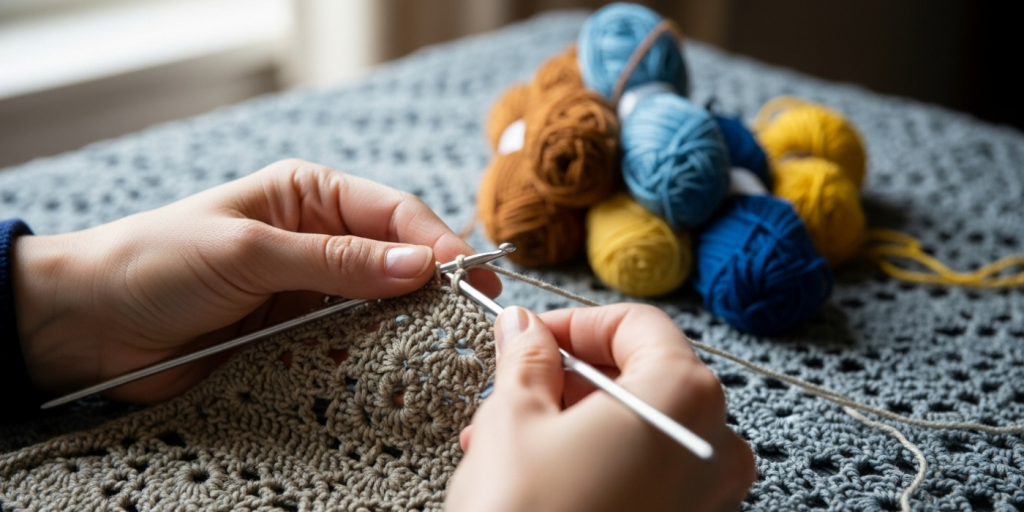
Tunisian combines knitting and crochet, creating dense, woven-like fabric perfect for blankets, sweaters, and bags.
Steps:
- Foundation Row: Chain desired width. Insert hook into 2nd chain from hook, yarn over, pull up loop. Repeat across—do not turn. You now have multiple loops on hook.
- Return Pass: Yarn over, pull through 1 loop. Yarn over, pull through 2 loops until 1 loop remains.
- Forward Pass (Basic Stitch): Insert hook under vertical bar of next stitch, yarn over, pull up loop. Repeat across.
- Advanced Variations:
- Tunisian Knit Stitch: Insert hook between front and back vertical bars.
- Tunisian Purl: Bring yarn forward, insert hook under front vertical bar, yarn over from back.
- Tunisian Entrelac: Work small triangles and squares in sequence to form interlocking diamonds.
Tip: Use a long Afghan hook or flexible cable hook for wide projects. Blocking is essential—Tunisian curls badly if unblocked.
2. Overlay Crochet
Creates 3D floral or geometric motifs by working stitches over previous rows.
Steps:
- Work a base row (often single crochet).
- On next row, skip stitches strategically to position “petals” or “leaves.”
- Work tall stitches (triple or quadruple treble) that arch over 3–5 base stitches.
- Anchor the tall stitch with a slip stitch into the base row to secure the overlay.
- Repeat motif across row, rotating direction for symmetry.
Example: A classic rose motif uses 5 overlay petals worked clockwise around a center cluster.
Caution: Maintain consistent tension—overlay stitches can pull fabric unevenly if too tight.
3. Broomstick Lace
Produces airy, lacy columns resembling knitted loops.
Tools: Standard hook + smooth dowel or large knitting needle (8–10mm).
Steps:
- Work a foundation row of single crochet.
- Pick-up Row: Insert hook into first sc, yarn over, pull up loop. Place loop onto broomstick. Repeat every 2–4 stitches (as pattern directs).
- Once 4–6 loops are on stick, slide them off in groups. Insert hook through all loops, yarn over, pull through to make a “lace group.”
- Work sc or dc into the base of the group to secure.
- Continue across row.
Design Tip: Vary group sizes (3, 5, 7 loops) for organic texture. Ideal for shawls and summer tops.
4. Filet Crochet
Uses open and solid mesh blocks to create pictorial or geometric designs.
Steps:
- Understand the grid: Each block = 2 dc + ch-2 space (open) or 4 dc (solid).
- Start with a foundation chain divisible by 3 + 1 (e.g., 31 chains = 10 blocks).
- Work chart from bottom right (like reading music).
- To change direction: Last dc of row becomes turning chain for next row.
- Use stitch markers every 5 blocks to stay aligned.
Pro Insight: Filet shines in monograms, holiday motifs, or modern abstract art. Use mercerized cotton for crisp definition.
5. Seamless Garment Construction (Yoke & Raglan Methods)
Eliminates sewing by building shaping directly into the crochet.
Top-Down Raglan Example:
- Start with neckline chain. Join to form ring.
- Work increase rounds at 4 points (front, back, shoulders) using markers.
- Increase every other round until yoke depth is reached.
- Separate body and sleeves by placing sleeve stitches on holders.
- Continue body in rounds; later pick up sleeve stitches and work down.
Key: Track increases meticulously. A single missed increase throws off symmetry.
Common Mistakes and How to Avoid Them
Even seasoned makers stumble. Here’s how to sidestep frequent pitfalls:
- Uneven Tension in Colorwork: Caused by pulling floats too tight. Keep unused yarn loose along the back; catch floats every 3–4 stitches.
- Curling Edges in Tunisian: Always block aggressively with steam or wet blocking. Consider adding a border in regular crochet.
- Miscounting Overlay Stitches: Use a row counter AND mark every 5th repeat with a locking marker.
- Gaps at Round Joins: Use spiral rounds (no slip stitch) or invisible join method for seamless appearance.
- Yarn Splitting in Fine Thread: Use sharp-tipped steel hooks and avoid “stabbing” the yarn—glide the hook between plies.
- Ignoring Gauge Swatches: Advanced patterns assume precise gauge. Swatch in the actual stitch pattern, not just dc.
Remember: Mistakes are data. Document what went wrong and how you fixed it—this builds your problem-solving intuition.
Advanced Tips and Professional Insights
From years of teaching workshops and consulting for handmade brands, here are nuanced strategies that elevate execution:
- Hook Material Matters: Wood hooks grip cotton for lace; metal glides through silk. Match tool to fiber.
- Blocking Is Non-Negotiable: Never photograph or ship an unblocked lace piece. Use rust-proof pins and gentle steam.
- Design with Negative Space: In overlay or filet, the empty areas define the image as much as the stitches.
- Hybrid Techniques: Combine Tunisian with regular crochet for collars or cuffs—dense yoke, drapey body.
- Photograph Process Shots: For your blog or shop, show close-ups of technique details. Customers appreciate transparency.
- Use Math Intentionally: Understand how stitch multiples affect circumference. For example, a hat needs a multiple of 8 for even crown decreases.
Experienced designers often recommend practicing new techniques in scrap yarn first—especially for expensive fibers like cashmere or hand-dyed skeins.
Real-World or Hypothetical Examples
Case Study 1: The Boutique Blanket Brand
A small business specializing in heirloom baby blankets switched from basic granny squares to Irish crochet motifs. By mastering picots, raised trellis, and padded rolls, they increased average order value by 65%. Their Instagram Reels showing “how the rose is built” went viral, driving traffic to their pattern store.
Case Study 2: The Sustainable Fashion Designer
Using seamless raglan construction in organic cotton, a maker launched a capsule collection of gender-neutral sweaters. Because there were no side seams, production time dropped by 30%, and returns due to fit issues fell to near zero. Customers praised the “effortless drape.”
Hypothetical Project: Market-Ready Shawl
Imagine a shawl combining broomstick lace edging with a filet crochet center panel featuring a minimalist mountain range. The contrast of textures creates visual interest, while the seamless join between sections demonstrates technical fluency—exactly what discerning buyers seek.
Customization and Adaptation Ideas
Advanced techniques aren’t rigid—they’re springboards for personal expression:
- Color Play: Use gradient yarns in Tunisian entrelac to enhance the geometric effect.
- Scale Shifts: Work overlay motifs in bulky yarn for bold home décor, or thread for jewelry.
- Hybrid Garments: Add a broomstick lace yoke to a stockinette-style Tunisian dress.
- Cultural Fusion: Incorporate traditional Orenburg lace patterns into modern filet grids.
- Functional Tweaks: Replace standard button bands with crocheted i-cord for durability.
Always ask: How can this technique serve the wearer’s experience? Comfort, ease of care, and emotional resonance matter as much as beauty.
Care, Maintenance, or Best Practices
Preserving your advanced work ensures longevity and customer satisfaction:
- Lace & Thread Items: Hand-wash in cool water with mild soap. Lay flat on towel, reshape, and air dry. Lightly starch if desired.
- Garments with Texture: Turn inside out before washing. Use mesh laundry bag on gentle cycle.
- Storage: Fold, don’t hang, heavy sweaters to prevent shoulder stretching. Store with cedar blocks to deter moths.
- Repair Skills: Learn duplicate stitching to fix dropped overlay loops or reweave broken filet threads.
Educate your customers—include a care card with every purchase. It builds trust and reduces damage-related complaints.
Monetization Opportunities
Mastering advanced techniques unlocks diverse income streams:
- Digital Patterns: Sell detailed PDFs with charts, photos, and video links. Platforms like Etsy or Ravelry thrive on niche techniques.
- Online Courses: Teach broomstick lace or seamless construction via Teachable or Podia. Bundle with printable cheat sheets.
- Commission Work: Offer custom heirloom pieces (e.g., wedding veils in filet crochet) at premium rates.
- Wholesale to Boutiques: High-skill items like overlay clutches or Tunisian coats appeal to curated retailers.
- Content Licensing: License your original stitch patterns to yarn companies for lookbooks or kits.
Focus on education, not hype. Your audience wants to learn—not be sold to.
Frequently Asked Questions (FAQ)
1. What’s the hardest advanced crochet technique to learn?
Many find overlay crochet challenging due to spatial planning and tension control. Start with small motifs before full garments.
2. Do I need special hooks for advanced techniques?
Not always, but ergonomic hooks reduce fatigue during long sessions. Steel hooks are essential for thread work below size 10.
3. Can I combine knitting and crochet in one project?
Yes! Hybrid techniques like “cro-knit” exist, but require careful gauge matching. Better to use crochet for edgings on knit bodies.
4. How long does it take to master Tunisian crochet?
With daily practice, most reach proficiency in 2–4 weeks. Focus first on consistent tension in the return pass.
5. Are advanced crochet techniques worth the effort for selling?
Absolutely. They justify higher price points, reduce competition, and attract serious collectors and gift buyers.
6. What’s the best way to fix a mistake in filet crochet?
Frog (undo) back to the error. Use a smaller hook to pick up dropped loops if only one block is affected.
Conclusion
Advanced crochet techniques are more than decorative flourishes—they’re the language of mastery. By investing time in Tunisian textures, overlay dimensionality, seamless construction, and lace precision, you position yourself not just as a maker, but as a creator of heirloom-quality work. In a market saturated with fast craft, your attention to detail becomes your signature.
Start small: choose one technique from this guide and swatch it this week. Document your progress, share your insights, and let your growing expertise attract the audience—and opportunities—you deserve. The yarn is waiting. Your hook is ready. Now go build something extraordinary.
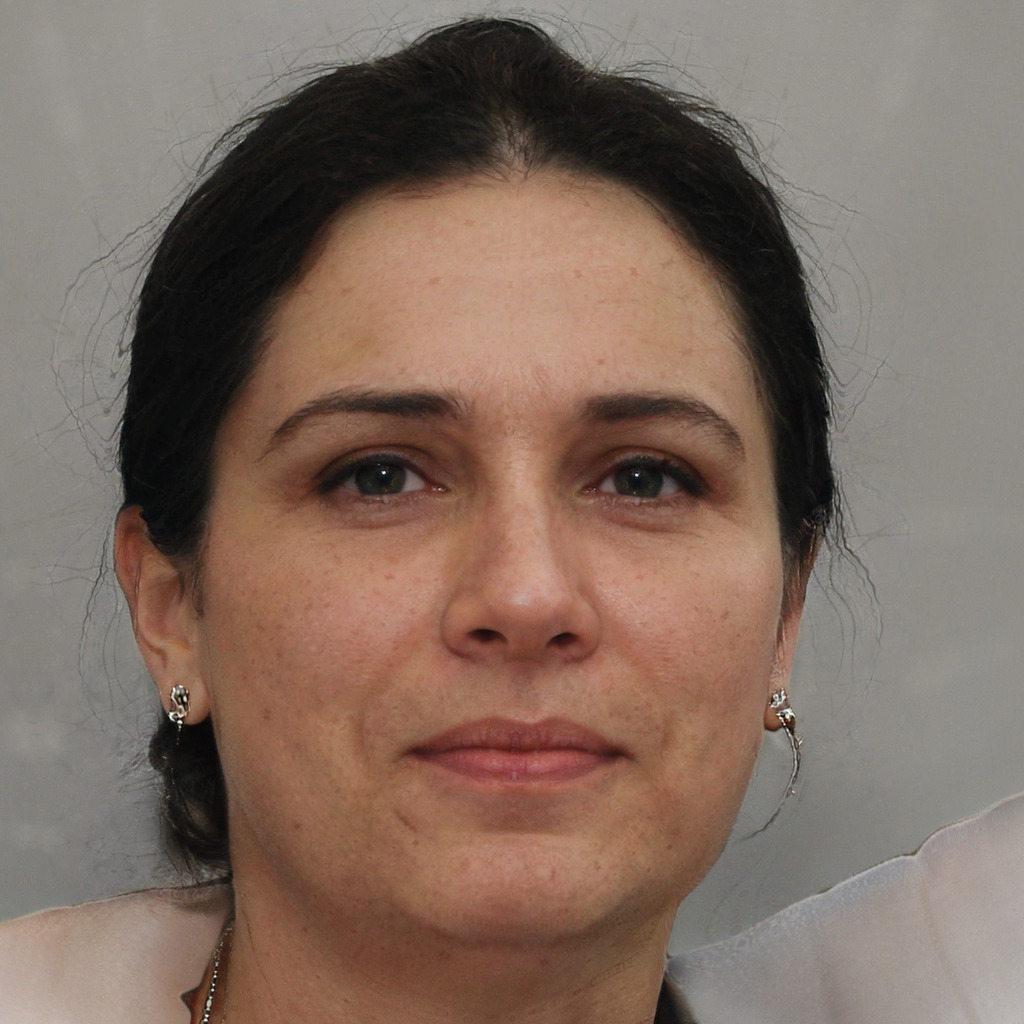
Helena Nogueira é uma entusiasta do crochê e do artesanato, explorando novas técnicas e projetos em busca de criações únicas e cheias de personalidade. Apaixonada por criatividade e desenvolvimento pessoal, ela alia dedicação e curiosidade para transformar fios em arte, cultivando hábitos que impulsionam seu crescimento enquanto compartilha beleza e inspiração com quem valoriza o feito à mão.