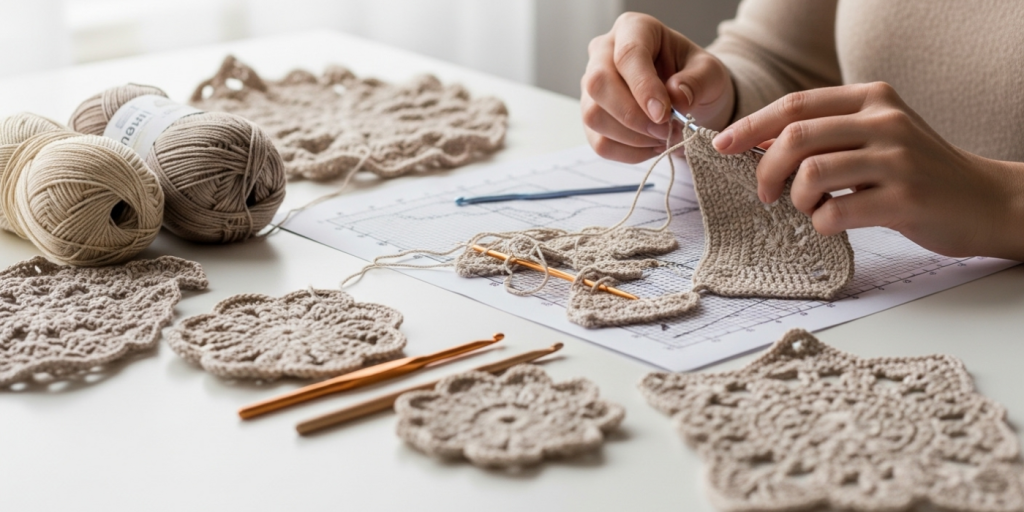
Introduction
Mastering the art of how to read and modify complex crochet patterns is a transformative skill for both hobbyists and professionals in the handmade industry. While beginner patterns often rely on straightforward stitch sequences and clear instructions, advanced designs—such as lace shawls, colorwork blankets, or sculptural garments—demand a deeper understanding of pattern structure, symbol interpretation, and adaptive customization. Many crocheters hit a wall when they encounter intricate charts, abbreviated terminology, or sizing that doesn’t match their needs. But with the right approach, even the most daunting pattern becomes a canvas for creativity and personal expression.
In my years working with independent designers, yarn brands, and online craft communities, I’ve seen countless makers evolve from passive pattern followers into confident co-creators. This shift isn’t just about aesthetics—it’s about empowerment, efficiency, and business potential. Whether you’re adjusting sleeve length for a custom-fit sweater or adapting a vintage motif for modern wearability, knowing how to read and modify complex crochet patterns unlocks new dimensions of your craft. In this comprehensive guide, we’ll break down every layer of this essential skill, offering actionable steps, professional insights, and real-world strategies that go far beyond basic tutorials.
What This Topic Means for Crochet & Knitting Businesses
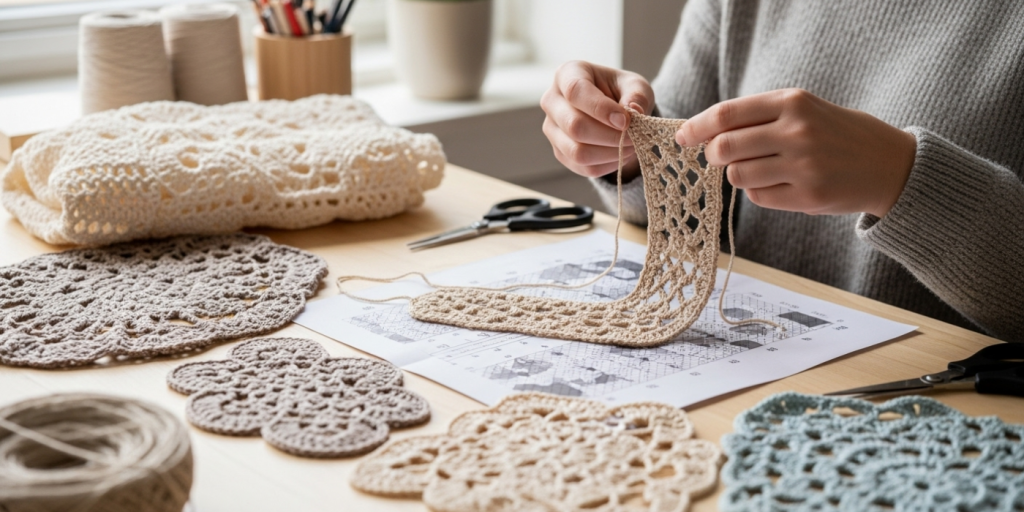
For handmade entrepreneurs, the ability to interpret and adapt complex patterns is not just a technical advantage—it’s a competitive differentiator. In many crochet businesses, especially those focused on custom commissions or limited-edition collections, clients rarely want an exact replica of a published design. They seek personalization: a longer hem, a softer fiber, a unique color palette, or inclusive sizing. Without the confidence to modify patterns, makers either turn down these opportunities or risk costly mistakes.
Moreover, digital pattern sales—a major revenue stream for indie designers—thrive on clarity and flexibility. Designers who anticipate common modification needs (e.g., providing multiple gauges, schematic diagrams, or notes on ease) earn stronger customer trust and fewer support requests. From working with multiple crochet brands, I’ve observed that top-performing pattern creators don’t just write instructions—they teach how to think through the pattern. This educational layer builds community loyalty and reduces refund rates.
Even for brick-and-mortar yarn shops or online retailers, offering workshops on pattern modification can drive foot traffic and increase yarn sales. Customers who learn to adapt a pattern are more likely to purchase multiple skeins for swatching or experimenting with alternatives. In short, how to read and modify complex crochet patterns isn’t just a maker skill—it’s a business catalyst.
Why This Strategy Works Especially Well in the Crochet Community
The crochet community has always been rooted in adaptation and resourcefulness. Unlike some crafts bound by rigid rules, crochet thrives on improvisation—think of the granny square, endlessly reimagined across cultures and generations. This cultural DNA makes the community uniquely receptive to pattern modification.
Experienced designers often recommend treating patterns as “recipes” rather than blueprints. Just as a chef might swap ingredients based on seasonality or dietary needs, a skilled crocheter adjusts stitch counts, hook sizes, or construction methods to suit their vision. Online forums like Ravelry, Instagram, and dedicated Facebook groups buzz with makers sharing their modified versions, troubleshooting tricky sections, and celebrating creative deviations.
This collaborative ethos lowers the psychological barrier to modification. Newer crocheters see that even experts tweak patterns—and that it’s not only acceptable but encouraged. Additionally, the rise of visual learning (via YouTube tutorials, TikTok reels, and photo-heavy blogs) has made complex techniques more accessible, further empowering makers to engage deeply with pattern structure.
When you understand how to read and modify complex crochet patterns, you join a long tradition of innovation within the craft—one that values both respect for original design and bold personal expression.
Materials, Tools, or Resources Needed
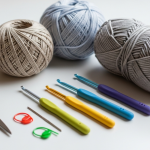
Before diving into modification, gather the right toolkit. These resources will streamline your process and reduce frustration:
- Printed or digital copy of the pattern: Preferably annotated or highlightable.
- Highlighters or colored pens: Use different colors for stitch repeats, shaping rows, and special instructions.
- Stitch markers: Essential for tracking pattern repeats, armhole placements, or motif centers.
- Measuring tape and ruler: For checking gauge and measuring your work against schematics.
- Graph paper or digital grid app: Helpful for charting your own modifications or visualizing repeats.
- Swatch yarn and spare hooks: Always test modifications on a small scale before committing.
- Notebook or digital note-taking app: Document every change you make for future reference or pattern writing.
- Crochet abbreviations glossary: Keep handy for decoding unfamiliar terms (e.g., “trtr” = triple treble).
- Pattern schematic (if available): A diagram showing garment measurements is invaluable for fit adjustments.
Many experienced crocheters also use project management tools like Trello or Notion to track multi-step modifications, especially for large projects like sweaters or blankets. The key is to create a system that lets you isolate variables—so if something goes wrong, you know exactly which change caused it.
Yarn Types and Fiber Considerations
Yarn choice dramatically impacts how a modified pattern behaves. A laceweight silk will drape differently than a bulky acrylic, even at the same gauge. When modifying complex patterns, consider these fiber factors:
- Drape vs. structure: Garments needing shape retention (like structured cardigans) benefit from wool or cotton blends. Flowy shawls shine in bamboo or silk.
- Memory and elasticity: Wool fibers “bounce back,” making them forgiving for fit adjustments. Cotton and linen lack elasticity, so sizing errors are harder to correct.
- Washability: If modifying a baby blanket or household item, prioritize machine-washable fibers—even if the original used luxury yarn.
- Color behavior: Variegated or self-striping yarns can obscure complex stitch textures. For lace or cable patterns, solid or semi-solid colors are often clearer.
- Gauge stability: Some fibers (like mohair) resist precise gauge measurement. Swatch aggressively and block your sample to see true behavior.
From working with multiple crochet brands, I’ve learned that yarn substitution is one of the most common reasons for modification. Always calculate yardage needs after substitution—complex patterns often use more yarn than estimated due to texture or shaping. A 10% buffer is wise; 20% for highly textured or colorwork designs.
Skill Level Breakdown
Understanding how to read and modify complex crochet patterns requires progressive skill development:
Beginner
- Can follow simple written patterns with basic stitches (sc, dc, ch).
- Understands gauge concept but may skip swatching.
- Unfamiliar with charts or symbols.
- Modification readiness: Limited to yarn/hook swaps with identical gauge. Not yet ready for structural changes.
Intermediate
- Comfortable with stitch multiples, repeats, and shaping (increases/decreases).
- Can read basic charts and understand common abbreviations.
- Has successfully completed garments or multi-part projects.
- Modification readiness: Can adjust length, width (within reason), and substitute similar-weight yarns. May struggle with altering construction order or motif alignment.
Advanced
- Decodes complex charts, written instructions, and hybrid formats fluently.
- Understands garment anatomy (armscye depth, cap height, ease).
- Confidently rewrites sections of patterns for custom fit or design.
- Modification readiness: Fully equipped to resize entire garments, merge patterns, or redesign motifs while maintaining structural integrity.
If you’re intermediate, focus first on mastering gauge math and repeat logic. Advanced crocheters should study pattern drafting principles to reverse-engineer designer intent—this makes modifications intuitive rather than guesswork.
Step-by-Step Guide: How to Read and Modify Complex Crochet Patterns
Step 1: Decode the Pattern Structure
Start by identifying the core components:
- Materials list: Note hook size, yarn weight, and required notions.
- Gauge: This is your anchor. Never skip swatching.
- Abbreviations: Create a legend if the pattern uses uncommon terms.
- Instructions: Divide into sections (e.g., “Body,” “Sleeves,” “Edging”).
- Charts vs. text: Determine which format dominates. Some patterns use both.
Step 2: Analyze Stitch Repeats and Multiples
Most complex patterns rely on stitch multiples (e.g., “multiple of 12 + 5”). Calculate:
- Total stitches needed for your desired width.
- How many full repeats fit.
- Adjust starting chain accordingly.
Example: A blanket pattern says “Ch a multiple of 14 + 3.” For a 40” width at 4 sts/inch, you need 160 sts.
160 – 3 = 157
157 ÷ 14 = 11.21 → Round down to 11 repeats
Final chain: (11 × 14) + 3 = 157
Step 3: Map Shaping and Construction
Highlight all shaping rows (armholes, waist darts, sleeve caps). Note:
- Where increases/decreases occur.
- Whether pieces are worked flat or in the round.
- Seam placements or seamless construction methods.
Step 4: Swatch with Intention
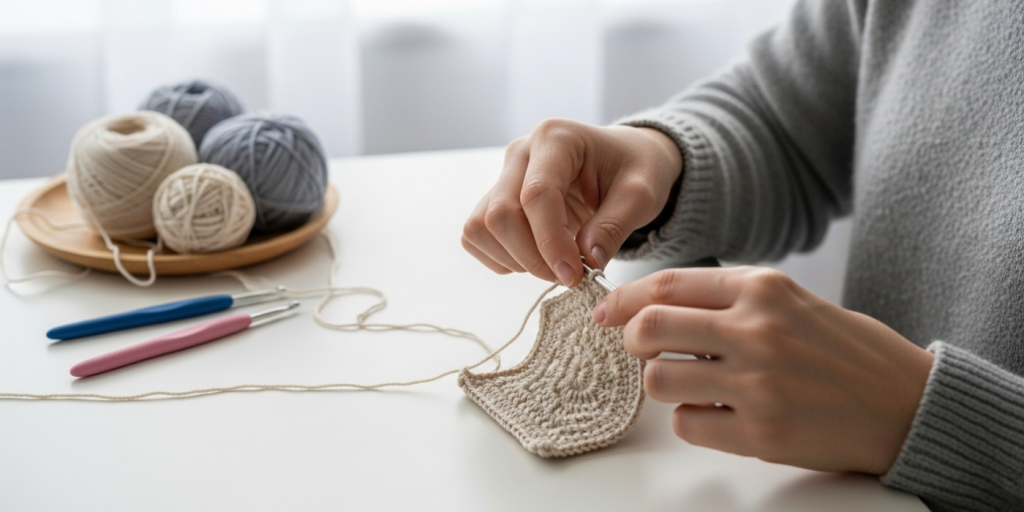
Swatch not just for gauge, but for:
- Drape and texture.
- How blocking affects stitch definition.
- Behavior of your chosen yarn/hook combo.
Block your swatch identically to how you’ll finish the final piece.
Step 5: Calculate Modifications Mathematically
Use proportions, not guesswork. To lengthen a sweater body by 2”:
- Determine rows per inch from swatch (e.g., 6 rows/inch).
- Add 12 rows evenly across relevant sections.
- Ensure added rows maintain pattern repeat integrity.
For resizing garments, use the formula:
(Your desired measurement ÷ Original pattern measurement) × Original stitch count = Your stitch count
Step 6: Test Modifications on a Mini-Sample
Before committing to the full project, recreate a small section with your changes. This catches errors early—especially critical in colorwork or lace.
Step 7: Document Every Change
Keep a modification log:
- “Changed sleeve length from 18” to 20” by adding 12 rows after underarm.”
- “Substituted DK cotton for worsted wool; adjusted hook to 4.5mm to match gauge.”
This log becomes invaluable for future projects or selling your own patterns.
Common Mistakes and How to Avoid Them
Mistake 1: Ignoring Gauge
Why it happens: Impatience or assuming “close enough” works.
Consequence: Entire project ends up too big/small or misshapen.
Fix: Always swatch and block. Measure over 4+ inches for accuracy.
Mistake 2: Altering Repeats Without Recalculating
Why it happens: Adding/subtracting stitches arbitrarily.
Consequence: Pattern breaks down; motifs don’t align.
Fix: Respect stitch multiples. Use the formula in Step 2 above.
Mistake 3: Modifying Multiple Variables at Once
Why it happens: Trying to change yarn, size, and length simultaneously.
Consequence: Impossible to troubleshoot when something fails.
Fix: Change one variable at a time. Test each independently.
Mistake 4: Skipping Schematic Measurements
Why it happens: Assuming “Medium” fits universally.
Consequence: Poor fit despite correct gauge.
Fix: Compare schematic measurements to your body (or recipient’s). Adjust ease as needed.
Mistake 5: Not Accounting for Yarn Substitution Yardage
Why it happens: Matching weight but not meterage.
Consequence: Running out of yarn mid-project.
Fix: Calculate total yards needed, then divide by your yarn’s yardage per skein. Round up.
Advanced Tips and Professional Insights
- Reverse-engineer the designer’s logic: Ask, “Why did they place the decrease here?” Understanding intent prevents destructive edits.
- Use graph paper for lace: Plot each row to visualize how holes and clusters interact. This reveals where you can safely add/remove repeats.
- Modify for accessibility: Shorten sweater bodies for wheelchair users, or replace tiny buttons with magnetic closures. Inclusive design expands your market.
- Leverage tech tools: Apps like Stitch Fiddle or Crochet Charts help visualize and edit patterns digitally.
- Preserve the “spirit” of the design: Even when changing elements, honor the original aesthetic—e.g., if it’s a boho lace shawl, don’t add stiff cables.
Experienced designers often recommend keeping a “modification journal” where you record what worked, what didn’t, and why. Over time, this becomes your secret playbook for confident customization.
Real-World or Hypothetical Examples
Example 1: Resizing a Grayscale Blanket
A client loved a published ripple afghan but needed it king-sized. The original used 1,200 yards in worsted weight.
- Calculated new dimensions: 108” x 90” vs. original 54” x 70”.
- Determined stitch multiple: 24 + 3.
- Swatched to confirm gauge held at larger scale.
- Ordered 3,200 yards (with 10% extra).
- Added 2 extra color transition rows to maintain gradient balance.
Result: A flawless custom heirloom, delivered on time.
Example 2: Adapting a Vintage Doily into a Modern Top
An indie brand wanted to repurpose a 1950s pineapple lace doily into a crop top.
- Mapped the doily’s radial repeats into vertical panels.
- Replaced thread with sport-weight cotton for drape.
- Added underbust shaping via strategic decreases.
- Used the original edging as the hem.
The top sold out in pre-orders—proof that thoughtful modification drives demand.
Customization and Adaptation Ideas
- Colorplay: Turn a monochrome pattern into intarsia or tapestry crochet.
- Hybrid construction: Combine a yoke from Pattern A with sleeves from Pattern B.
- Functional upgrades: Add pockets, thumbholes, or hidden zippers.
- Seasonal tweaks: Convert a winter cowl into a summer scarf by using linen and removing bulk.
- Cultural fusion: Incorporate traditional motifs (e.g., Oaxacan embroidery stitches) into Western garment shapes.
Always ask: “What story does this modified piece tell?” Customization isn’t just technical—it’s narrative.
Care, Maintenance, or Best Practices
- Label your modified projects: Include yarn, hook, and key changes for future reference.
- Photograph each stage: Helps replicate success or diagnose issues.
- Store digital backups: Save annotated PDFs or cloud docs of your modified patterns.
- Respect copyright: You can modify for personal use or commissions, but never resell the altered pattern as your own without permission.
- Share ethically: When posting mods online, credit the original designer and link to their pattern.
Monetization Opportunities
Understanding how to read and modify complex crochet patterns opens several income streams:
- Custom commissions: Charge premium rates for personalized sizing or design tweaks.
- Pattern testing: Brands pay experienced crocheters to test and suggest improvements.
- Workshops: Teach modification skills online or in local yarn shops.
- Digital templates: Sell editable schematic sheets or modification calculators.
- Consulting: Advise indie designers on writing adaptable patterns.
Educational content (like this guide) also builds authority, leading to affiliate partnerships, ad revenue, or sponsored collaborations—all while genuinely helping your community.
Frequently Asked Questions (FAQ)
What’s the difference between reading and modifying a crochet pattern?
Reading means following instructions as written. Modifying involves intentional changes to size, shape, materials, or design while preserving structural integrity.
Can I modify a pattern without knowing how to design from scratch?
Yes! You don’t need to draft original patterns to adapt existing ones. Focus on understanding repeats, gauge, and shaping logic.
How do I resize a garment pattern without a schematic?
Measure a similar garment that fits you well. Use those dimensions as your target, then calculate stitch/row counts based on your swatch gauge.
What if my modified pattern doesn’t look like the photo?
Photos often use specific yarns, lighting, and blocking. As long as your gauge matches and construction is sound, differences in drape or texture are normal—and part of customization.
Are there legal issues with modifying patterns?
For personal use or custom commissions: no. For resale of the item: usually allowed (check designer’s terms). For resale of the modified pattern: requires explicit permission.
How do I fix a mistake in a complex lace pattern without frogging everything?
Use lifelines! Thread a contrasting yarn through a stable row below the error. Rip back only to that point, then rework from there.
Conclusion
Learning how to read and modify complex crochet patterns transforms you from a passive consumer into an active creator. It’s a skill that blends technical precision with artistic intuition—and one that pays dividends in both personal satisfaction and professional opportunity. Whether you’re crafting a gift that fits perfectly, launching a custom-made product line, or simply breathing new life into a vintage design, this ability puts you in control of your creative journey.
Start small: adjust the length of a scarf, swap a yarn, or add a border. With each project, your confidence will grow. Remember, every expert crocheter once stood where you are now—facing a confusing chart, wondering if they could make it their own. They did. And so can you.
Grab your hook, your swatch, and that challenging pattern you’ve been avoiding. It’s time to make it yours.

Helena Nogueira é uma entusiasta do crochê e do artesanato, explorando novas técnicas e projetos em busca de criações únicas e cheias de personalidade. Apaixonada por criatividade e desenvolvimento pessoal, ela alia dedicação e curiosidade para transformar fios em arte, cultivando hábitos que impulsionam seu crescimento enquanto compartilha beleza e inspiração com quem valoriza o feito à mão.